Last Updated: November 15, 2026
Quick Summary
Professional water damage restoration cost depends mainly on how quickly the response starts and how much of the structure is affected, not just the size of the flood. Mitigation and reconstruction are priced separately, so compare each phase on its own terms.
- Water removed and dried quickly usually means a smaller final invoice.
- Higher-risk water categories raise costs through more cleaning, disposal, and safety protocols.
- Ask contractors to quote mitigation and reconstruction separately.
- Check that extraction square footage matches the moisture map, not just the visible puddle.
- Confirm equipment days against the drying log, since mismatched days are a common billing dispute.
Table of Contents
- What Water Damage Restoration Cost Looks Like in Practice
- Water Category: Clean, Gray, and Black Water and Why It Changes the Price
- Affected Area, Extent of Damage, and Water Restoration Cost per Square Foot
- Mitigation Versus Reconstruction: Where the Costs Split
- Reading a Water Damage Restoration Estimate Line by Line
- Using a Water Damage Repair Cost Calculator and Price Sheet as a Starting Point
- Insurance Coverage, Deductibles, and Documenting Your Claim Before You Book
- Your Next Step: Request a Free Estimate from Eco Friendly Steemers
- Frequently Asked Questions
What Water Damage Restoration Cost Looks Like in Practice
Water damage restoration cost depends less on the size of the flood and more on how fast the response starts and how much of the structure is affected. The sooner water is removed and the structure is dried, the smaller the final invoice tends to be. A burst pipe caught in its first hours can often be handled with extraction and drying alone, while the same leak left for several days can turn into a much larger job.
Most homeowners look for a single number first. That is understandable, but the number only makes sense once you know what it covers. A typical restoration job moves through a few distinct stages: emergency water extraction, structural drying, monitoring, cleanup, and in some cases demolition and rebuilding. Each stage carries its own labor and equipment charges, and each can be priced differently depending on the scope.
We recommend reading any quote against the full list of services it includes. Our full overview of what water damage restoration includes walks through each stage, so you can see what a complete job covers before you compare prices.
Water Category: Clean, Gray, and Black Water and Why It Changes the Price
The source of the water matters as much as the amount.
Higher-risk categories generally mean more extensive cleaning, more disposal of porous materials like carpet padding and drywall, and stricter safety protocols for crews. Those factors raise the cost.
Affected Area, Extent of Damage, and Water Restoration Cost per Square Foot
Many contractors estimate water damage restoration cost per square foot of affected space, and that is a reasonable starting point. The affected area includes not only the visibly wet floor but also the walls, subfloor, and cavities that wicked moisture. A small puddle on hardwood can hide moisture under the floor boards and behind the baseboards, which is why the true footprint is often larger than what the eye sees.
Damage severity also matters. Wet carpet that can be dried and cleaned costs far less than carpet that has to be pulled, discarded, and replaced. The same is true for drywall, insulation, and flooring that has absorbed water for days. When you compare bids, ask the contractor to explain how they measured the affected area and which materials they expect to remove.
Extraction, Structural Drying, and How Moisture Readings Decide When Work Ends
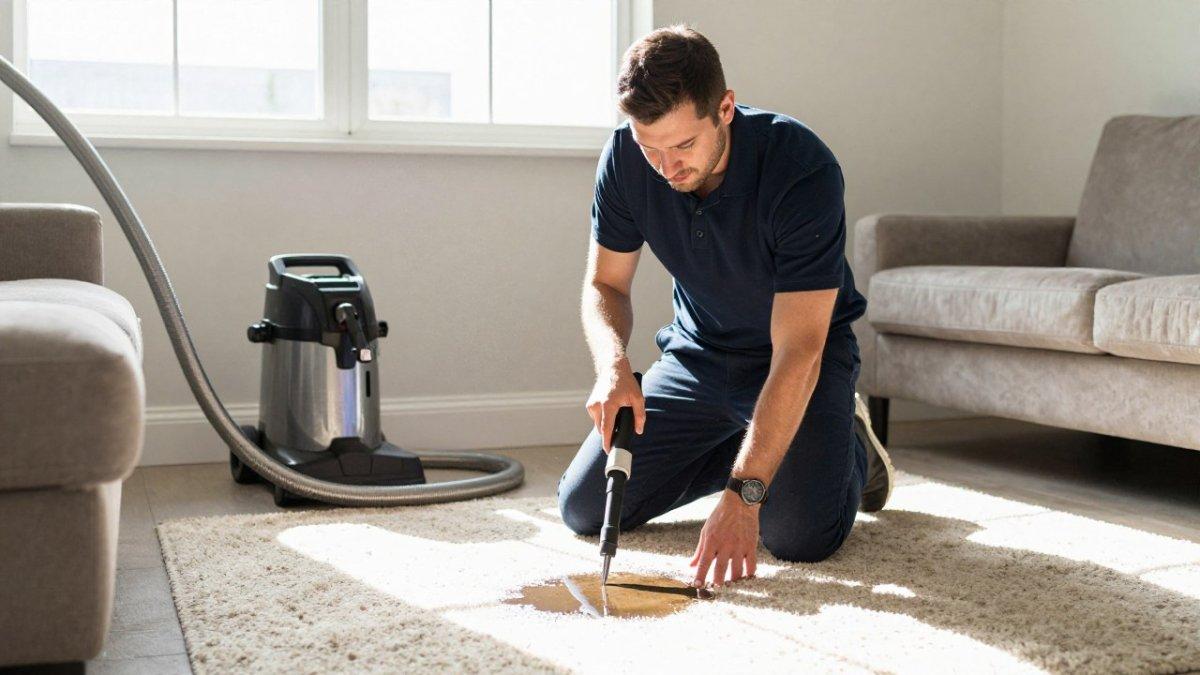
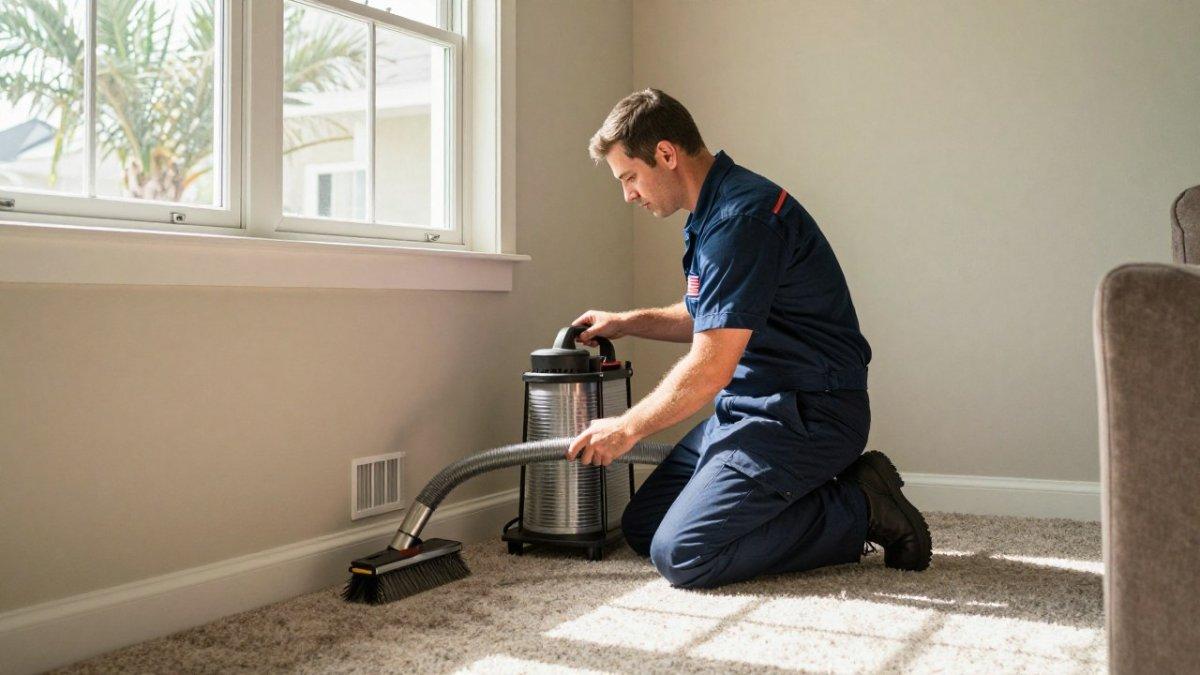
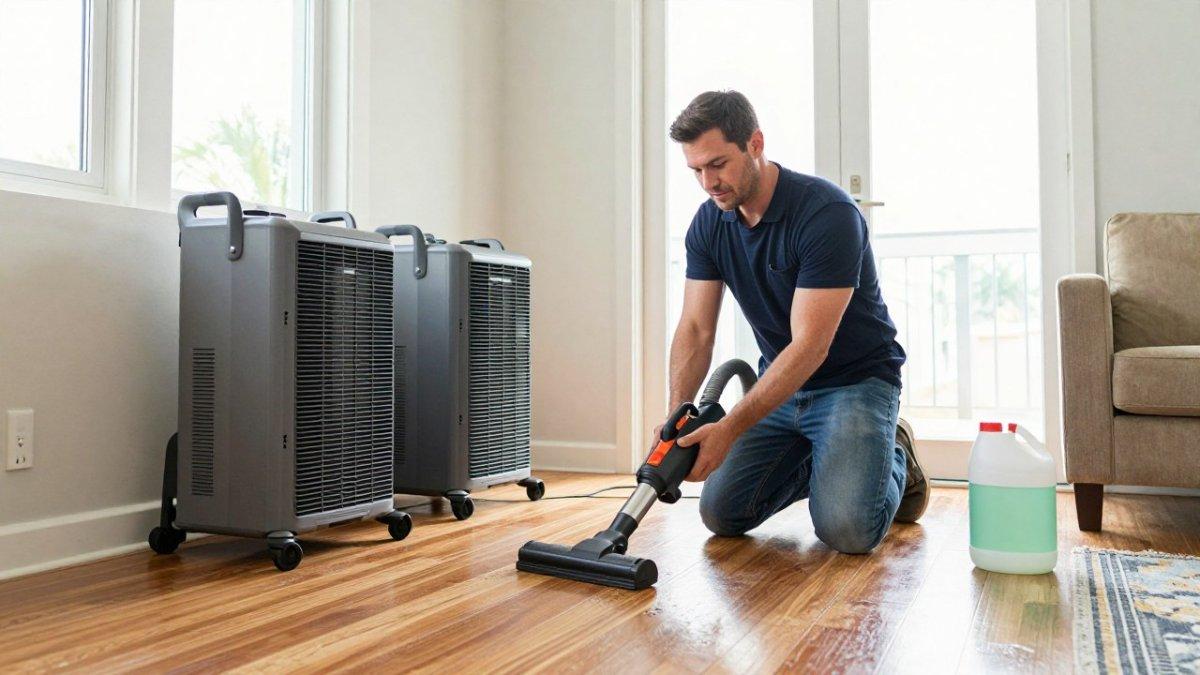
Extraction removes standing water, usually with truck-mounted or portable extractors. Structural drying follows, using air movers and dehumidifiers to pull moisture out of building materials. The cost of this phase depends on how many units run, for how many days, and how much space they cover.
Mitigation Versus Reconstruction: Where the Costs Split
Restoration is two different businesses that often share one invoice. Mitigation is the emergency and drying work: stopping the source, extracting water, setting equipment, monitoring moisture, removing unsalvageable material, and treating surfaces. Reconstruction is the rebuild: new drywall, flooring, cabinets, trim, paint, and finish work.
The split matters because the two phases are priced on different bases, and mixing them is the most common reason a per-square-foot quote is misleading.
When you compare bids, ask each contractor to quote mitigation and reconstruction separately, and ask these questions:
- Does the mitigation quote state equipment units and days, or a single drying package price?
- Is demolition included in mitigation, and is the removed material itemized?
- Is reconstruction a fixed scope with named materials and finish grades, or an allowance?
- Are permits, inspections, and any code upgrades called out separately?
- Does the contractor perform both phases, or subcontract the rebuild?
Watch out: a bid that presents one blended per-square-foot number for "restoration" can hide whether the rebuild is included at all, and comparing that number to a split bid is not a like-for-like comparison.
A useful rule of thumb: judge the mitigation quote on documentation (moisture map, drying log, equipment days) and judge the reconstruction quote on scope (materials, quantities, finish grade, permits). They are different decisions, and they should be reviewed separately.
Reading a Water Damage Restoration Estimate Line by Line
A detailed estimate lists each task, the quantity, and the unit price, then totals them. That structure is what lets you compare two bids on equal terms and spot charges you did not agree to. A lump-sum estimate hides all of it.

Most restoration estimates follow the same line-item logic, even when the exact rates differ by provider and region:
- Water extraction, priced per square foot of affected floor area, or per hour for standing water
- Air movers and dehumidifiers, priced per unit per day, with the number of days stated
- Moisture monitoring, priced per visit, with the number of visits stated
- Antimicrobial treatment, priced per square foot of treated surface
- Containment and negative air, priced per linear foot of barrier or per day of equipment
- Demolition and material removal, priced per square foot of drywall, flooring, or cabinetry removed, plus disposal
- Content handling and cleaning, priced per item or per room
- Reconstruction, quoted separately, usually per square foot of replaced material plus finish grade
| Line item | Unit | Quantity | What to verify |
|---|---|---|---|
| Water extraction | per sq ft | 400 | Matches the measured wet area |
| Air movers | per unit per day | 6 units × 4 days | Days match the drying log |
| Dehumidifiers | per unit per day | 2 units × 4 days | Sized to the cubic footage |
| Moisture monitoring | per visit | 4 visits | Each visit has readings attached |
| Antimicrobial treatment | per sq ft | 400 | Area matches extraction |
| Drywall removal (affected) | per sq ft | 120 | Cut line documented in photos |
| Debris disposal | per load | 2 | Tied to the removed material |
| Reconstruction (separate quote) | per sq ft | 120 | Finish grade and scope stated |
When you read a real estimate, check four things first. The square footage for extraction should match the moisture map, not just the visible puddle. The equipment days should match the drying log, because equipment running longer than the log shows is a common billing dispute. Demolition should name the materials removed, not just "demo." And reconstruction should appear as its own section or a separate quote, so mitigation charges are not blended into rebuild pricing.
Watch out: an estimate that lists equipment as a single "drying package" charge with no unit count or day count cannot be audited against the drying log, and that is where overcharges usually hide. Learn how to prevent mold during drying and when to call professionals before the work drags on.
Using a Water Damage Repair Cost Calculator and Price Sheet as a Starting Point
Many homeowners search for a water damage restoration price sheet PDF. These documents can show how a provider structures its pricing, which is useful for comparison. Always confirm current rates directly with the provider, since rates change and some calculators use averages that do not reflect your situation.
Insurance Coverage, Deductibles, and Documenting Your Claim Before You Book
Homeowners insurance often covers sudden water damage from a burst pipe, but it may not cover long-term leaks or damage from flooding, which typically requires a separate policy. Read your policy to confirm how it treats sudden versus gradual damage, what your deductible is, and whether there is a coverage limit for water mitigation.
Your Next Step: Request a Free Estimate from Eco Friendly Steemers
Water damage gets more expensive the longer it sits, and the right estimate depends on the details of your home. We are a licensed and insured, BBB accredited family-owned team with 20 years of experience across Central Florida. You can request a free estimate from our team and check our current service prices before you call.
Frequently Asked Questions
How much does water damage restoration usually cost?
Costs vary widely with the water category, how much of the structure is wet, and how long drying takes. Price depends on the scope of work, not a single flat rate. Ask for an itemized estimate that separates water extraction, structural drying, demolition, and rebuilding so you can see which part drives the total. Eco Friendly Steemers offers a free estimate, and
Does insurance cover professional water damage restoration?
Many standard homeowners policies cover sudden water damage from a burst pipe, but they often exclude long-term leaks, flooding, and damage from neglected maintenance. Your deductible and policy limits determine how much of the restoration cost is paid. Document the damage with dated photos, keep the mitigation invoices, and ask your adjuster which services are covered before work begins.
Does contaminated water make restoration cost more?
Yes. Gray water from appliances and black water from sewage require additional cleaning, antimicrobial treatment, and more removal of porous materials such as drywall, insulation, and flooring. Black water generally adds the most cost because contaminated materials must be removed rather than dried. Ask any provider to state which water category they assumed in their estimate.
How can I compare water damage restoration bids fairly?
Compare estimates on the same scope. Check that each bid lists the same affected area, the same water category, the same drying equipment days, and the same repair materials. A low total can hide missing line items such as moisture monitoring or content handling. Confirm licensing and insurance, and ask for the moisture readings that justify the drying plan.