Last Updated: November 8, 2026
Quick Summary
Water damage restoration includes stopping the water, extracting standing water, drying the structure, cleaning and sanitizing affected surfaces, and removing and replacing materials that cannot be saved. Professional providers also map moisture and document each step for insurance purposes.
- Water category (clean, gray or black) determines how much material must be removed.
- Drying is verified by moisture readings matching unaffected areas, not by feel.
- Porous materials like carpet pad, drywall and insulation are typically removed rather than dried after contaminated water.
- Ask for moisture readings, drying logs and itemized scope in writing as the job progresses.
- Flood damage is generally excluded from homeowners policies and needs separate flood insurance.
Table of Contents
- Water Damage Categories and Contamination Levels
- Water Mitigation vs. Restoration: Where the Line Falls
- Step-by-Step: The Water Damage Restoration Process
- Water Damage Restoration Checklist: What to Do Before Professionals Arrive
- How Long Water Damage Restoration Takes and How You Know It Is Done
- Water Damage Restoration and Homeowners Insurance
- Scheduling Your Water Damage Restoration Estimate
- Frequently Asked Questions
When a pipe bursts or a roof leaks, most homeowners in Central Florida ask the same first question: what happens now? Water damage restoration is the full process of stopping the water, drying the structure, cleaning and sanitizing what remains, and repairing or replacing what cannot be saved. The sequence below is how restoration work is typically approached.
Water Damage Categories and Contamination Levels
Water is not all the same, and the category of the water determines how much of your home has to come out. Clean water from a supply line is the least hazardous. Gray water, such as from a dishwasher or washing machine overflow, carries contaminants. Black water, from sewage or floodwater, carries pathogens and usually means porous materials like carpet pad and drywall must be removed.
Water Mitigation vs. Restoration: Where the Line Falls
Mitigation is the emergency phase: extracting standing water, stopping further damage and drying the structure to prevent mold. Commercial services across Central Florida include water restoration if you need help with either phase. Restoration is the rebuilding phase: removing damaged materials, cleaning, and repairing drywall, flooring and cabinetry. Many homeowners assume one company does both, but the line between them is where scope disputes often begin.
Step-by-Step: The Water Damage Restoration Process
A professional restoration job follows a defined sequence. Skipping or rushing a step can allow a home to develop mold or require more material removal later. The stages below are what a complete scope of work should include, and each one produces documentation you should receive.
Inspection and Moisture Mapping
A technician first confirms the water source and stops it, then inspects the affected area for visible damage and safety hazards. Moisture meters and thermal imaging are used to map how far moisture has traveled behind walls, under floors, and inside cabinets, which surface inspection alone will miss. The technician also assigns a water category (clean, gray, or black) and a class of loss that describes how much of the structure is wet.
Water Extraction and Removal
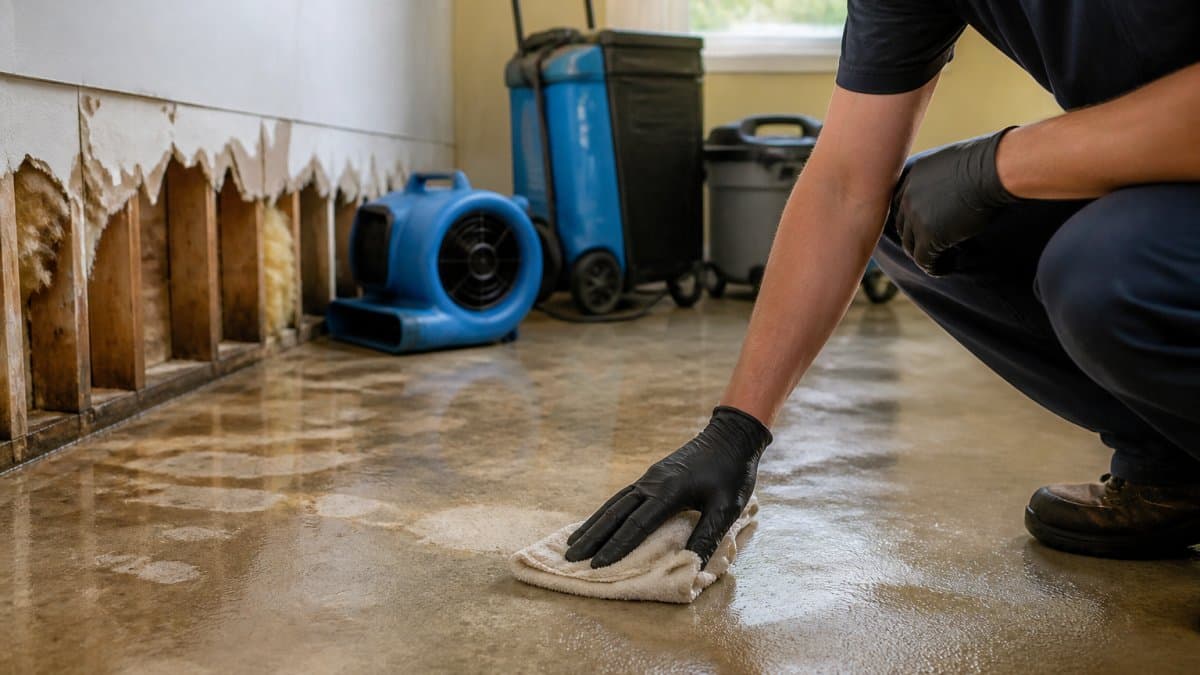
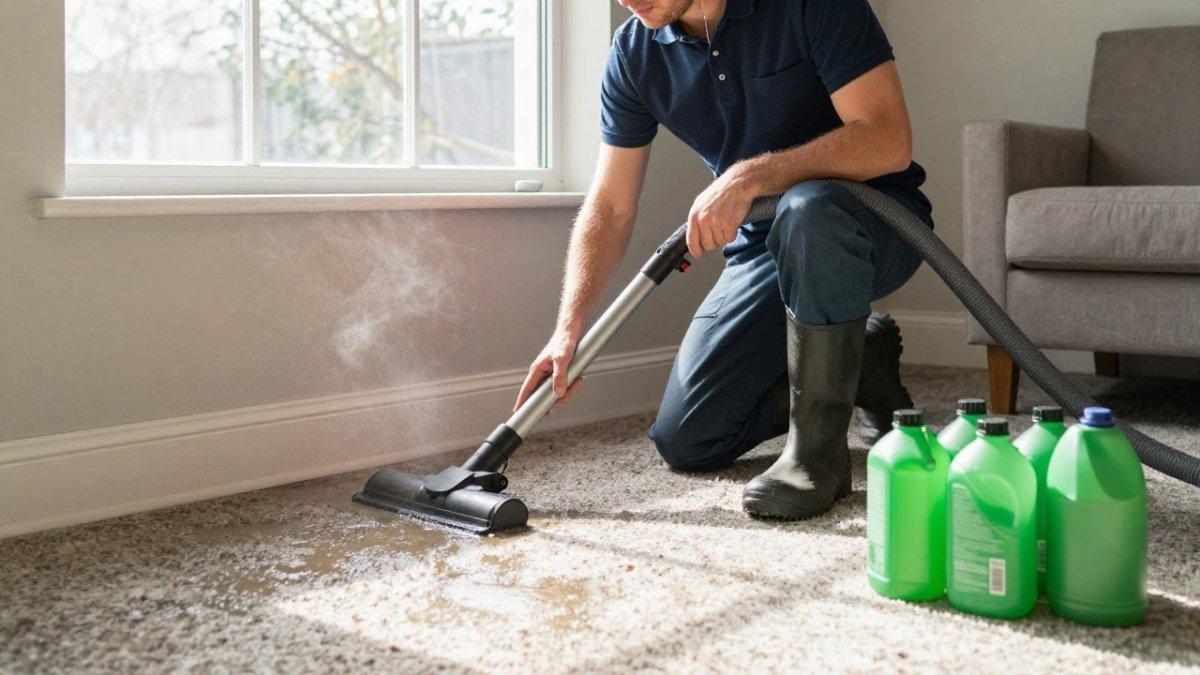
Standing water is pumped out with truck-mounted or portable extractors. Extraction is not just about visible water; technicians use weighted extraction tools on carpet and pad and pull water from hard surfaces and subfloors. The faster standing water is removed, the less moisture wicks into framing and drywall. Porous materials that have absorbed contaminated water, such as carpet pad, drywall, and insulation, are typically removed rather than dried.
Drying and Dehumidification
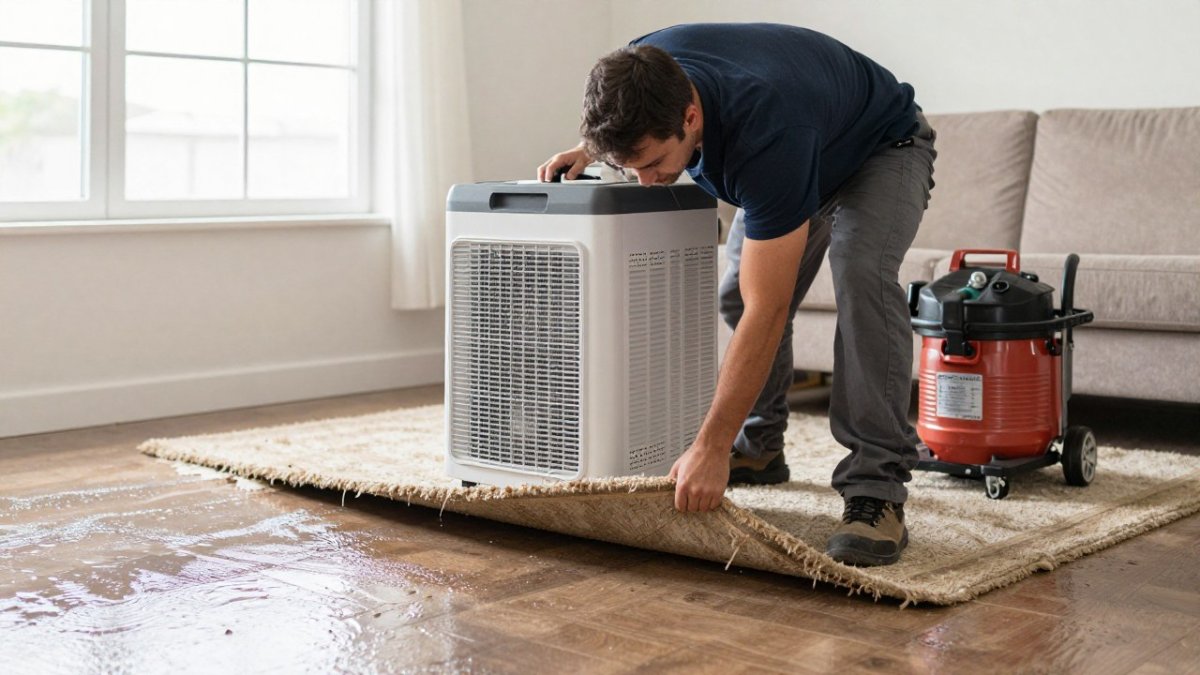
After extraction, air movers and dehumidifiers run to evaporate moisture from materials and remove it from the air. Technicians monitor moisture content in the structure and relative humidity in the air, adjusting equipment placement and count as readings change. Drying is not judged by feel; it is judged by readings returning to a dry standard established from unaffected materials in the same home.
Cleaning, Sanitizing, and Odor Control
Once materials are dry, affected surfaces are cleaned and sanitized. The level of cleaning depends on the water category: clean-water events may need only light cleaning, while gray or black water requires antimicrobial treatment and often removal of porous materials. Odors are addressed at the source rather than masked, using extraction, cleaning, and in some cases air scrubbers with HEPA or carbon filtration.
Mold Prevention and Remediation
Mold can begin growing in damp conditions, so prompt drying is an important prevention step. If mold is already present, remediation may include containment barriers, HEPA filtration, removal of affected materials, and cleaning of structural surfaces. Mold remediation is often a separate scope from water restoration, and your provider should tell you whether it is included or handled by a separate contractor.
Removing Damaged Materials and Reconstruction
Materials that cannot be dried or cleaned, such as saturated drywall, insulation, carpet, and some flooring, are removed and disposed of. This is where mitigation ends and reconstruction begins. Reconstruction returns the property to its prior condition: replacing drywall, installing flooring, reinstalling trim and cabinetry, and painting.
The restoration sequence breaks down into distinct stages, each with its own job and the documentation you should receive.
| Stage | What happens | Documentation to request |
|---|---|---|
| Inspection and moisture mapping | Confirm and stop the water source, map moisture, assign category and class | Moisture readings and water category in writing |
| Water extraction | Pump standing water and extract from carpet, pad and subfloors | Extraction record of affected areas |
| Drying and dehumidification | Run air movers and dehumidifiers, monitor readings | Daily drying logs with readings |
| Cleaning and sanitizing | Clean and treat surfaces based on water category | Scope of cleaning treatments |
| Mold prevention and remediation | Dry promptly; contain, filter and remove if mold is present | Confirm whether remediation is included |
| Removing damaged materials and reconstruction | Remove unsalvageable materials, then rebuild to prior condition | Itemized scope and invoices |
Water Damage Restoration Checklist: What to Do Before Professionals Arrive
Before the crew arrives, take steps that protect both your home and your claim:
- Shut off the water source if you can do so safely.
- Turn off electricity to affected areas if water is near outlets or fixtures.
- Photograph and video every affected area before moving anything.
How Long Water Damage Restoration Takes and How You Know It Is Done
Drying time depends on the category of water, the materials involved and humidity. A small clean-water event may dry in a few days, while structural damage can take weeks of rebuilding after drying is complete. Restoration is considered done when moisture readings in the structure match readings in unaffected areas and the technician documents that standard in writing.
Water Damage Restoration and Homeowners Insurance
Most homeowners policies cover sudden and accidental water damage, such as a burst supply line or an appliance failure, but commonly exclude gradual leaks, repeated seepage, flood damage, and damage from lack of maintenance. Because coverage depends on the policy and the cause of loss, the documentation produced during restoration matters as much as the cleanup itself. To see what professional cleaning and restoration costs typically involve, read the tile and grout cleaning cost guide.
What Restoration Providers Document
A professional job produces a paper trail that insurers routinely request: moisture readings and a moisture map, the water category and class of loss, daily drying logs, photos of affected areas before and after work, an itemized scope of work, and invoices for equipment and materials. Ask for these documents as the job progresses rather than at the end, because adjusters may need them to approve the next phase of work.
How Estimates and Adjusters Fit In
Restoration providers prepare an itemized estimate based on the scope they documented. Your insurer may send an adjuster to inspect the damage and compare the estimate against the policy's coverage and limits. A common pattern is a back-and-forth between the provider's estimate and the adjuster's assessment, and the provider may revise the scope if hidden damage is found once materials are opened up.
Coverage Boundaries to Check Before Work Begins
Review your policy's deductible, coverage limits, and any exclusions for mold, flood, or gradual damage before authorizing work. Flood damage is generally excluded from homeowners policies and requires separate flood insurance, and mold coverage is often capped or limited to mold that results from a covered water event. If you are unsure what your policy covers, your insurance agent can explain the boundaries in writing.
Keeping Your Claim on Track
Keep receipts for emergency measures such as plastic sheeting, pumps, or temporary repairs, and photograph and video every affected area before anything is moved. Notify your insurer promptly, provide the provider's documentation when requested, and keep a written record of communications. If a claim is disputed, your provider's moisture logs and itemized scope are usually the strongest evidence that the work was necessary.
Scheduling Your Water Damage Restoration Estimate
Pricing depends on the size of the affected area, the category of water and the materials involved, so current prices and quotes are available through the Eco Friendly Steemers pricing page. Use the service calculator to get a quick price sense before you schedule.
Frequently Asked Questions
What is included in water damage restoration? Water damage restoration typically includes water extraction, structural drying, dehumidification, cleaning and sanitizing, and removal and replacement of damaged materials.
How long does water damage restoration take? Duration depends on the water category, the materials affected and humidity levels.
Does homeowners insurance cover water damage restoration? Many policies cover sudden water damage, but gradual leaks and flood damage are often excluded.
Frequently Asked Questions
What does water damage restoration include?
Water damage restoration typically includes an initial inspection and moisture assessment, identifying and stopping the water source, extracting standing water, drying the structure and contents with air movers and dehumidifiers, cleaning and sanitizing affected surfaces, removing materials that cannot be saved, and completing repairs. Some providers also document the work with photos and moisture readings, which can help with insurance claims. Scope depends on how far the water spread and how long it sat, so ask for a written scope of work before work begins. Eco Friendly Steemers offers water extraction and mold remediation services in Central Florida; visit the website to request a free estimate.
Is water damage restoration covered by homeowners insurance?
Coverage depends on the cause of the water damage and the terms of your policy. Sudden events such as a burst pipe are often covered, while long-term leaks, flooding and gradual seepage are commonly excluded or limited. Mold remediation may have separate sublimits. Document the damage with photos and keep receipts for emergency services. Review your policy or contact your insurer before authorizing major work so you understand what is covered.
How long does water damage restoration take?
Timelines vary with the size of the affected area, the category of water, and the materials involved. Timelines depend on the scope of damage, and structural drying can take several days or longer. Drying is considered complete when materials reach readings close to their normal dry levels, measured with a moisture meter. Repairs and reconstruction can extend the timeline further. Ask your restoration provider for a projected schedule and the criteria they will use to confirm drying is finished.
What is the difference between water mitigation and water damage restoration?
Water mitigation is the emergency phase focused on stopping further damage: removing standing water, drying the area, and preventing mold growth. Water damage restoration goes further by repairing and rebuilding what was damaged, such as replacing drywall, flooring, or cabinetry. Mitigation usually comes first and sets the stage for restoration. Some providers handle both, while others specialize in one phase, so confirm which services are included in your quote.
Does water damage restoration include mold remediation?
Not always. Standard restoration focuses on drying and cleaning, but if mold is found, remediation may be needed as a separate scope. Mold growth can begin in damp conditions, which is why fast drying matters. If you suspect mold behind walls after a leak, ask for an inspection that includes moisture readings and, where needed, mold sampling. Eco Friendly Steemers provides mold remediation as part of its services.
What should I avoid saying to an insurance adjuster about water damage?
Stick to facts. Describe what you saw, when you saw it, and what you did in response. Avoid guessing about the cause or the total cost, and do not agree to a settlement figure before reviewing the estimate. Avoid signing documents you have not read. Keep records of all communication and ask your restoration provider for documentation that supports the scope of work.
What should I do before water damage restoration professionals arrive?
Stop the water source if it is safe, such as shutting off the main valve. Move valuables and electronics out of the way, and photograph the damage before anything is removed. Avoid using electrical devices in standing water. If the water is contaminated, keep people and pets away from it. Turning on your HVAC system can help circulate air, but check with your provider first.
How do I know a water damage restoration company is licensed and insured?
Ask for proof of current licensing and liability insurance before booking, and verify it with the issuing state or local agency. Confirm the company's insurance covers work in your home. Check whether it is accredited by the Better Business Bureau, and ask for references you can contact. Eco Friendly Steemers states it is licensed, insured and BBB accredited.