Table of Contents
- What Professional Tile and Grout Cleaning Costs
- Tile and Grout Cleaning Cost Per Square Foot
- Steam Cleaning Tile Floors Cost and What It Includes
- Factors That Affect Professional Tile and Grout Cleaning Price
- Getting an Accurate Tile and Grout Cleaning Estimate
- Grout Sealing Cost and Long-Term Value
- Flat-Rate Versus Hourly Pricing for Tile Cleaning
- How to Compare Tile and Grout Cleaning Quotes
- Frequently Asked Questions
Last Updated: October 19, 2026
What Professional Tile and Grout Cleaning Costs
Professional tile and grout cleaning cost depends on several factors, but understanding the basics helps you budget accurately. The exact price varies based on square footage, tile condition, and the cleaning method used.
The tile and grout cleaning cost per square foot typically ranges widely depending on the service provider.
At Eco Friendly Steemers, we’ve helped Central Florida homeowners understand what they’re paying for when they hire professionals. The key is knowing what drives pricing so you can compare quotes fairly and avoid surprises.
Tile and Grout Cleaning Cost Per Square Foot
The tile and grout cleaning cost per square foot is the metric most providers quote first, and it is the one you should use to normalize every bid you receive. A per-square-foot rate lets you compare a 200-square-foot bathroom against a 900-square-foot great room on the same basis, instead of comparing two flat totals that may cover very different scopes.
Providers typically publish a base cleaning rate for routine soil, then step up for heavier conditions and for sealing. Rather than anchor on one figure, ask each provider to quote your project against the same four tiers:
- Routine cleaning (light soil): the base per-square-foot rate, usually the lowest tier
- Deep cleaning (moderate to heavy buildup): a higher rate reflecting extra dwell time, agitation, and passes
- Cleaning plus sealing: the cleaning rate plus a separate per-square-foot sealing charge
- Specialty or delicate tile: a premium rate for natural stone and other surfaces that need pH-neutral products and lower pressure
A Worked Example You Can Reuse
Suppose you have 400 square feet of ceramic tile in a kitchen and adjoining hallway, with moderate grout soil and no sealing. If a provider quotes a base rate for routine cleaning and a deep-clean rate for moderate buildup, your estimate should land at the deep-clean rate multiplied by 400, plus any minimum charge or travel fee. If you add sealing, the sealing rate applies to the same 400 square feet.
What the Rate Should and Should Not Include
A per-square-foot rate is only comparable if you know its boundaries. Confirm whether the rate covers:
- Pre-treatment and dwell time on stained grout lines
- Mechanical agitation (brush or pad) versus extraction only
- Rinsing and extraction of cleaning residue
- Furniture moving, or whether that is billed separately
- Sealing, or whether sealing is a separate line item
- Minimum charges, travel fees, and any stair or tight-access surcharge
Two quotes can share the same headline rate and still differ once minimums, furniture moving, and sealing are added. The per-square-foot number is the starting point, not the total.
Pro Tip
Ask each provider to quote the same square footage, the same condition tier, and the same inclusion list (cleaning only, then cleaning plus sealing). Like-for-like quotes expose the real price difference; mismatched scopes hide it.
Why the Rate Moves Between Providers
Even for identical square footage, rates differ because of labor cost, equipment, insurance, and how the provider defines a “clean.” A provider whose rate includes pre-treatment, agitation, rinsing, and a post-clean inspection is not overpriced relative to one whose rate covers a single extraction pass, it is selling a different service. Judge the rate against the inclusion list, not against the lowest number on the page.
Steam Cleaning Tile Floors Cost and What It Includes
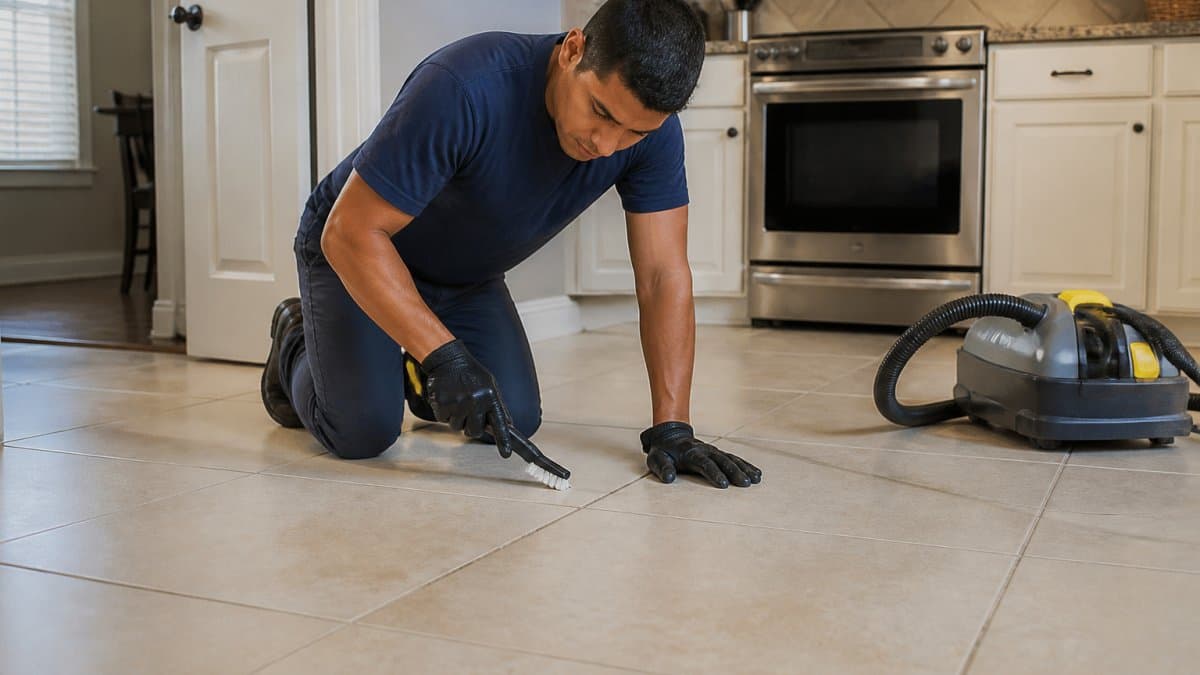
Steam cleaning tile floors cost reflects the equipment, labor, and expertise required. This method uses hot water extraction to remove embedded dirt, bacteria, and stains from grout lines and tile surfaces.
A professional steam cleaning service typically includes:
- Pre-inspection and spot treatment of stains
- Hot water extraction cleaning of tile surfaces
- Deep grout line cleaning with specialized equipment
- Rinse and extraction to remove cleaning solution residue
- Drying time guidance
The steam cleaning tile floors cost reflects the specialized equipment and training required. However, the results are deeper and longer-lasting, especially for heavily soiled grout.
Different tile materials respond differently to steam. Porous stones like travertine need gentler treatment than glazed ceramic tiles.
Factors That Affect Professional Tile and Grout Cleaning Price
The professional tile and grout cleaning price is not a single market rate, it is the output of several variables that stack on top of the base per-square-foot rate. Understanding how each one moves the number lets you predict your quote and spot a bid that is priced for a different scope than the one you described.
Tile and Grout Condition
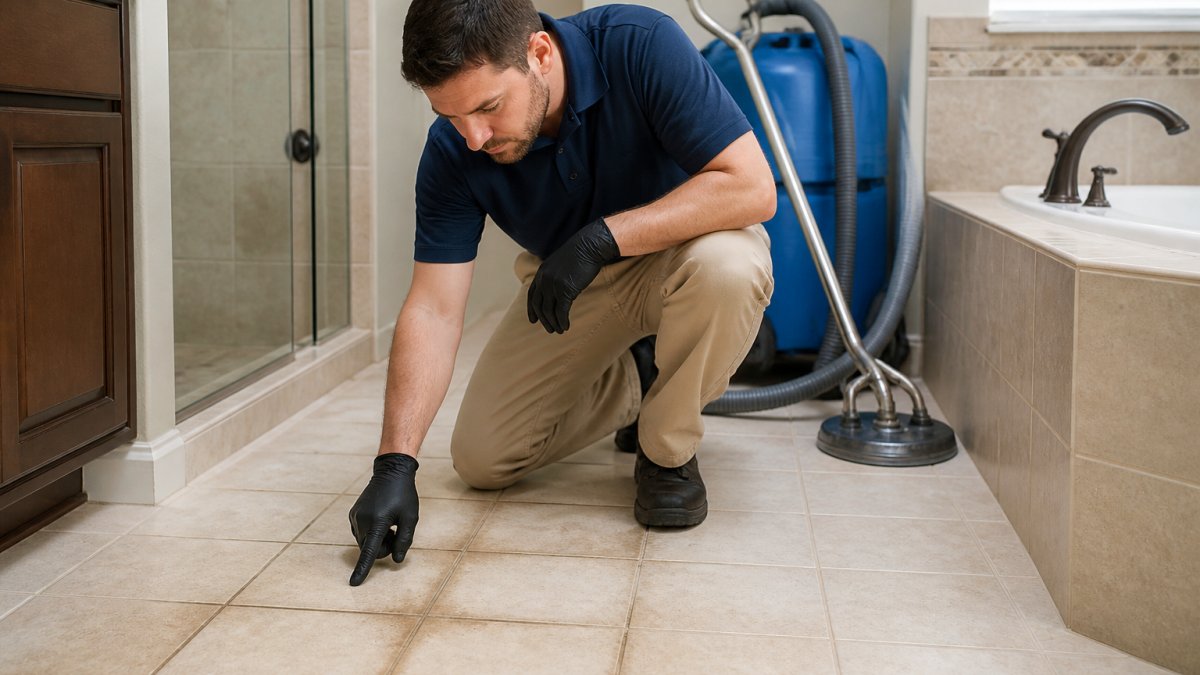
Condition is the largest single swing factor after square footage. Clean grout that needs maintenance sits at the base rate.
The mechanism matters: soil that has polymerized into the grout pores does not release in one pass, so labor time per square foot rises. Be candid about condition when you request a quote, an accurate deep-clean rate is cheaper than a base rate that gets re-quoted upward after the technician arrives.
Project Size and Room Layout
Square footage sets the baseline, but layout sets the labor efficiency. The same 500 square feet costs less as one open great room than as several small bathrooms and a galley kitchen, because setup, equipment movement, and edge work repeat in every room. Tight access points, appliances blocking tile, and stairs with grout lines all add time. Providers price this as setup and handling labor, so a fragmented layout can push the effective per-square-foot rate above the published base.
Tile Material and Delicacy, the Pricing Risk Most Quotes Hide
Tile material changes both the method and the risk, and risk is priced. This is where quotes diverge most and where a cheap bid can become expensive.
- Ceramic and porcelain: durable and tolerant of standard cleaning and moderate pressure, usually priced at the base or deep-clean tier.
- Natural stone (marble, travertine, slate, limestone): porous and acid-sensitive. Standard alkaline or acidic cleaners can etch or dull the surface, so the provider must use pH-neutral products, lower pressure, and often a different pad. Expect a specialty rate and confirm the provider has stone experience.
- Unglazed or textured tile: holds soil in the texture and needs more agitation, which raises labor time.
- Unsealed grout: more porous and absorbs stains deeper, so cleaning takes longer and sealing becomes a stronger recommendation.
- Sealed grout: easier to clean, but the sealer may need refreshing after cleaning, which is a separate line item.
The pricing risk is real: a provider who uses the wrong chemistry on natural stone can etch the surface, and correcting that damage costs far more than the cleaning. When you compare quotes on stone, ask what products and pressure the provider will use.
Sealing Needs
If grout is unsealed, the provider will likely recommend sealing after cleaning. Sealing is priced separately, usually per square foot of grout area, and adds to the total. It is worth pricing because sealed grout stays clean longer and reduces how often you need deep cleaning, but it should appear as its own line item so you can decide whether to include it.
Access, Furniture, and Add-Ons
Furniture moving, appliance pulling, and tight-access handling are frequently billed separately or excluded from the base rate. So are stain treatments beyond routine soil and any odor or mold remediation. Ask which of these are included and which are add-ons, because they are the most common source of a final invoice that exceeds the quoted price.
Watch Out
A quote that does not ask about your tile material or grout condition is a quote for a generic floor, not your floor. Material sensitivity and condition are the two factors most likely to change both the price and the result, so a provider who skips those questions is either guessing or planning to re-quote on site.
Getting an Accurate Tile and Grout Cleaning Estimate
A detailed estimate is your best tool for comparing providers and avoiding surprise charges. The right estimate breaks down exactly what you’re paying for and when.
When requesting a tile and grout cleaning estimate, ask for:
- Total square footage being cleaned
- Per-square-foot rate or flat fee
- Specific cleaning methods that will be used
- Whether sealing is included or quoted separately
- Timeline and drying time
- Guarantees or warranties on the work
- Insurance and licensing verification
The estimate should match your actual project. If a provider gives a quote without seeing the space or knowing the tile condition, that’s a red flag. Accurate estimates require an in-person assessment or detailed photos and description.
Watch Out
Beware of quotes that seem unusually low. Professional cleaning requires proper equipment, trained technicians, and liability insurance. Extremely cheap quotes often mean corners are being cut or hidden charges will appear later.
Grout Sealing Cost and Long-Term Value
Grout sealing cost is separate from cleaning, but the two services work together. Sealing protects grout after cleaning, preventing stains from setting in as quickly.
Unsealed grout is porous and absorbs spills, dirt, and bacteria. Sealed grout resists staining and is easier to keep clean. The grout sealing cost varies based on:
- Total square footage of grout lines
- Type of sealer used (penetrating versus membrane)
- Number of coats applied
- Tile material (some materials benefit more from sealing)
Sealing typically lasts depending on foot traffic and moisture exposure. High-traffic bathrooms or kitchens need resealing more often. The long-term value comes from reducing how frequently you need deep cleaning, sealed grout stays cleaner longer.
Key Takeaway
Sealing grout after professional cleaning is an investment that extends the life of your cleaning results and reduces future maintenance costs.
Flat-Rate Versus Hourly Pricing for Tile Cleaning
Two common pricing models exist: flat-rate and hourly. Understanding the difference helps you choose a provider and know what to expect.
Flat-rate pricing means the provider quotes a fixed price for the entire project:
- Predictable total cost
- No surprises if work takes longer
- Provider absorbs any inefficiency risk
- Encourages efficient work
Hourly pricing charges for time spent:
- Lower initial quote possible
- Final cost depends on actual hours worked
- Harder to predict total expense
- Incentivizes slower work
Flat-rate pricing for defined projects protects you from unexpected charges and gives the provider clear expectations. Hourly rates are less common for standard cleaning but may apply to complex restoration work.
Ask providers upfront which model they use. Flat-rate pricing is typically more transparent and easier to compare across multiple quotes.
How to Compare Tile and Grout Cleaning Quotes
Comparing quotes requires more than just looking at the total price.
Create a comparison by listing:
| Factor | Quote 1 | Quote 2 | Quote 3 |
|---|---|---|---|
| Total square footage | |||
| Cleaning method | |||
| Sealing included | |||
| Per-square-foot rate | |||
| Timeline | |||
| Guarantee/warranty | |||
| Licensed and insured |
This side-by-side view shows what each provider is actually offering.
Ask each provider the same questions. Request itemized breakdowns showing labor, materials, and any additional services.
Check reviews and verify licensing.
Getting the right professional tile and grout cleaning service means understanding what you’re paying for and comparing apples to apples.
At Eco Friendly Steemers, we provide detailed estimates that break down exactly what our tile and grout cleaning cost includes.
Frequently Asked Questions
How much does professional tile and grout cleaning cost per square foot?
Professional tile and grout cleaning cost per square foot varies based on tile condition, grout soil level, and local service rates. Pricing depends on whether you choose flat-rate or hourly billing, the complexity of the project, and whether sealing is included. Request a detailed estimate from a professional cleaner to get accurate pricing for your specific square footage and project needs.
What factors affect the cost of professional tile and grout cleaning?
Key factors include tile material and condition, grout stain severity, project size, whether sealing is needed, and your geographic location. Delicate tile types may require specialized techniques that affect labor costs. Deep cleaning of heavily soiled grout takes more time than average condition surfaces. Minimum charges often apply regardless of room size, and additional services like sealing add to the total project cost.
How much does steam cleaning tile floors cost compared to other methods?
Steam cleaning tile floors cost depends on surface area, grout condition, and whether the service provider uses eco-friendly solutions. Steam cleaning is one cleaning method among several professional options. The actual cost reflects labor time, equipment, and any sealing service included. Get quotes from multiple service providers to compare pricing for your specific needs and project scope.
Does professional tile and grout cleaning include sealing, or is that an extra cost?
Sealing is typically an optional add-on service, not automatically included in tile and grout cleaning cost. Grout sealing cost varies based on square footage and sealing product type. Sealing protects grout from future stains and extends the time between cleanings, adding long-term value. Confirm whether sealing is included or quoted separately when you receive your detailed estimate from a professional cleaner.