Last Updated: November 5, 2026
Quick Summary
To clean office carpets without disrupting work, clean in zones during business hours using low-moisture or dry methods that dry in about 30 to 60 minutes, and save hot water extraction for after hours since it needs 4 to 8 hours to dry. Vacuum loose soil first, treat spots, then block each zone off until it is dry to the touch.
- Vacuum dry soil before any liquid touches the carpet so grit is not pushed deeper.
- Low-moisture methods dry in about 30 to 60 minutes; hot water extraction needs 4 to 8 hours.
- Map heavy, moderate, and light traffic zones and deep clean heavy lanes quarterly.
- Ventilate while you work and keep foot traffic off until the carpet is dry to the touch.
- Call a professional when traffic lanes stay gray after vacuuming or the carpet smells musty.
Table of Contents
- Why Loose Soil and Surface Debris Come First
- Commercial Carpet Cleaning Methods That Limit Downtime
- Building an Office Carpet Cleaning Schedule Around Traffic
- How to Clean Office Carpets DIY Without Emptying the Floor
- Drying Times and Safe Re-Entry Guidance
- Professional Carpet Cleaning for Offices: When to Call In Help
- Request a Free Estimate for After-Hours Office Carpet Cleaning
- Frequently Asked Questions
Why Loose Soil and Surface Debris Come First
Most office carpet problems start with dirt you can't see.
That slow abrasion is what dulls color and flattens traffic lanes over time. It also creates the gritty texture that makes a commercial carpet look worn out long before it actually is.
So any plan for how to clean office carpets without disrupting work starts with the cheapest, fastest step: getting loose soil out before it works its way down.
Here's the order that matters:
- Dry soil first. Vacuum before any liquid touches the carpet, or you push grit deeper.
- Then spots. Treat spills while they're still on the surface.
- Then deep cleaning. Save the wet work for soil that's already bonded to the fibers.
Commercial Carpet Cleaning Methods That Limit Downtime
The right commercial carpet cleaning methods depend on how fast the floor needs to be back in service. Some methods dry in under an hour. Others need most of a day. Picking the wrong one is how a simple cleaning turns into a lost workday.
Dry and Low-Moisture Options
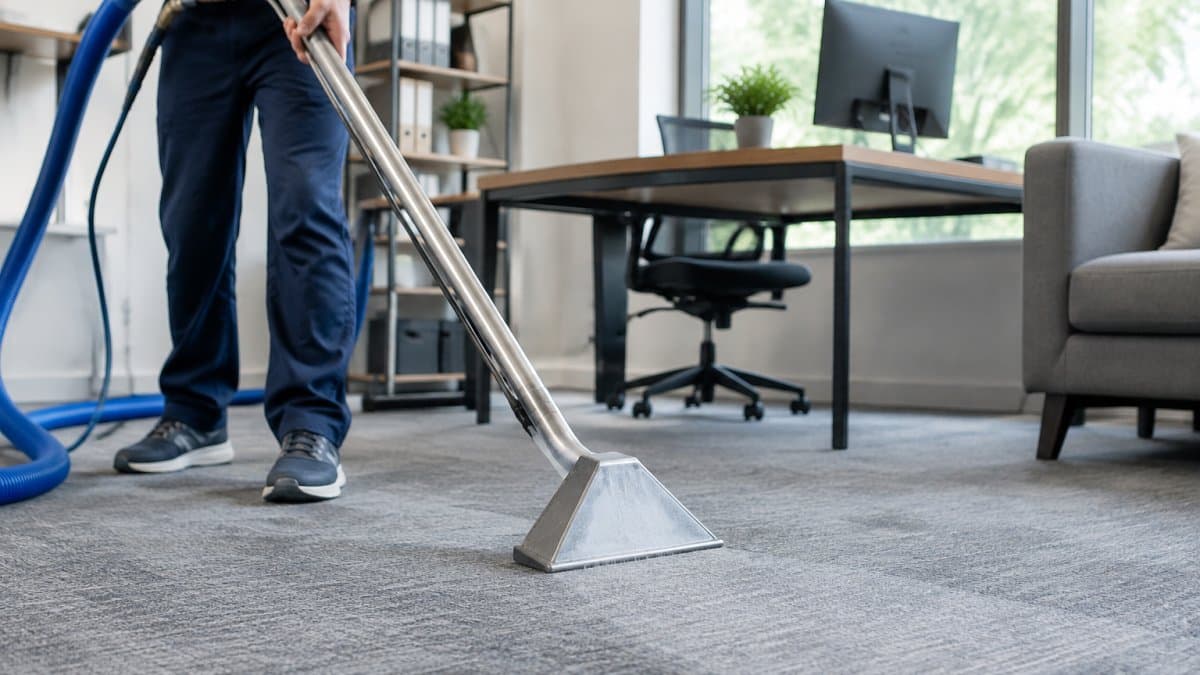
Dry cleaning uses a carpet-cleaning powder or compound that traps soil, then gets vacuumed away. There's no water, so there's no drying time. Low-moisture cleaning applies a small amount of solution and agitates it in with a brush, leaving only a light dampness.
Both work well for:
- High-traffic areas that can't close
- Delicate or wool carpet fibers
- Quick touch-ups between deeper cleans
- Floors with equipment or furniture that can't move
The trade-off is depth. These methods lift surface soil and freshen appearance, but they don't flush out the grime that's settled at the base of the pile.
Spot Cleaning Versus Deep Cleaning
Spot cleaning handles spills and stains one at a time. Deep cleaning resets the whole floor.
| Situation | Best Method | Typical Downtime |
|---|---|---|
| Fresh coffee spill | Spot cleaning | Minutes |
| Dull, gray traffic lanes | Deep cleaning | Several hours |
| Daily upkeep | Vacuuming | None |
| Between deep cleans | Dry or low-moisture | Under an hour |
| Pet or food stain | Spot treatment, then deep clean | Same day |
Spot cleaning is fast and cheap. But if you're spot cleaning the same traffic lane every month, that's a sign the floor needs a full deep clean, not another spot pass.
Building an Office Carpet Cleaning Schedule Around Traffic
A workable office carpet cleaning schedule follows your foot traffic, not the calendar. Busy entrances, reception desks, and main walkways collect soil fastest. Corner offices and storage rooms barely need attention by comparison.
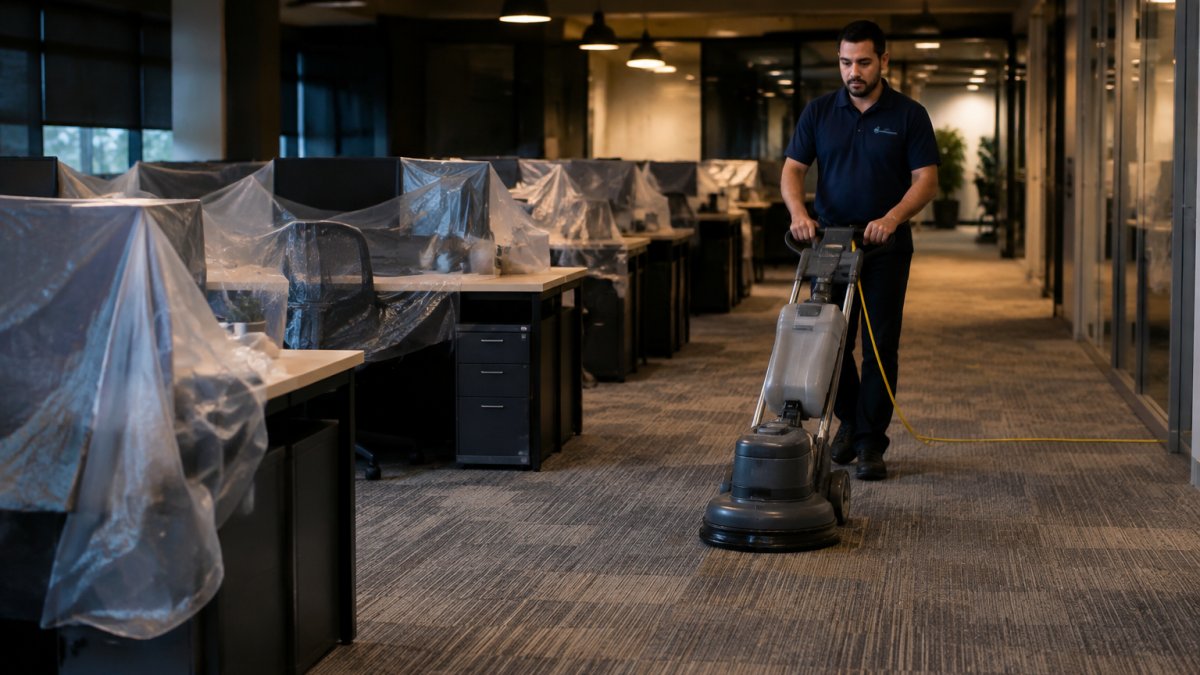
Start by mapping traffic zones
Walk the floor during your busiest hour and mark three zones:
- Zone 1, Heavy traffic: main entrances, reception, elevator lobbies, primary walkways, breakroom thresholds. These see the most footfalls per day and collect the most tracked-in grit.
- Zone 2, Moderate traffic: secondary aisles, conference room entries, copy areas, and the paths between workstations.
- Zone 3, Light traffic: private offices, storage rooms, server rooms, and corners that staff rarely cross.
Heavy traffic lanes usually need attention far more often than quiet corners, so cleaning the whole floor on one schedule can waste effort.
Frequency chart by zone and carpet type
Use this as a starting point, then adjust for weather, foot traffic, and whether staff wear outdoor shoes indoors.
| Task | Zone 1 (heavy) | Zone 2 (moderate) | Zone 3 (light) |
|---|---|---|---|
| Vacuum high-traffic lanes | Daily | 2-3 times per week | Weekly |
| Vacuum full zone, including under desks | 2-3 times per week | Weekly | Every 2 weeks |
| Spot clean and treat stains | Daily as needed | Weekly | As needed |
| Deep clean (hot water extraction or low-moisture) | Quarterly | Twice a year | Annually |
| Restorative deep clean of entire floor | Twice a year | Twice a year | Twice a year |
Adjust the frequency by carpet type. Loop pile commercial carpet hides soil and tolerates frequent cleaning, so it can absorb the heavier end of the schedule. Cut pile and wool show wear sooner, so they need gentler products, more careful vacuuming, and less aggressive agitation.
What changes the schedule
- Weather and season: Rain, snow, and road salt push soil loads up. Add a daily vacuum pass in entry zones during wet months and place walk-off mats at every entrance.
- Staffing changes: A new shift, a remodel, or a move-in generates extra debris and traffic. Bump Zone 1 to daily vacuuming for the first two weeks.
- Events and client visits: Schedule a spot pass and a quick vacuum the day before, not the morning of.
- Carpet age: Older carpet with worn fibers traps soil more aggressively and may need a shorter deep-clean interval.
A simple way to measure whether the schedule is working
Pick a fixed spot in Zone 1 and photograph it monthly under the same lighting. Compare the traffic lane's color and texture against a protected area under a desk or in a closet.
A common pattern is to over-clean the whole floor on a calendar schedule while under-cleaning the lanes that actually need it. Zone-based scheduling fixes that mismatch without adding total labor hours.
How to Clean Office Carpets DIY Without Emptying the Floor
You can clean office carpets during business hours if you work in zones. The trick is to clean one section at a time while staff keep working in the rest of the office. What most guides skip is the safety and indoor-air-quality side of doing this while people are present. That is the part that decides whether in-hours cleaning is a minor inconvenience or a real disruption.
- Pick a low-traffic window. Early morning or the last hour of the day works well. Avoid the hour before a client visit or an all-hands meeting.
- Clear and prep one zone. Move chairs and bins, then vacuum the area. Put a cone or a sign at each entry point so no one walks through mid-task.
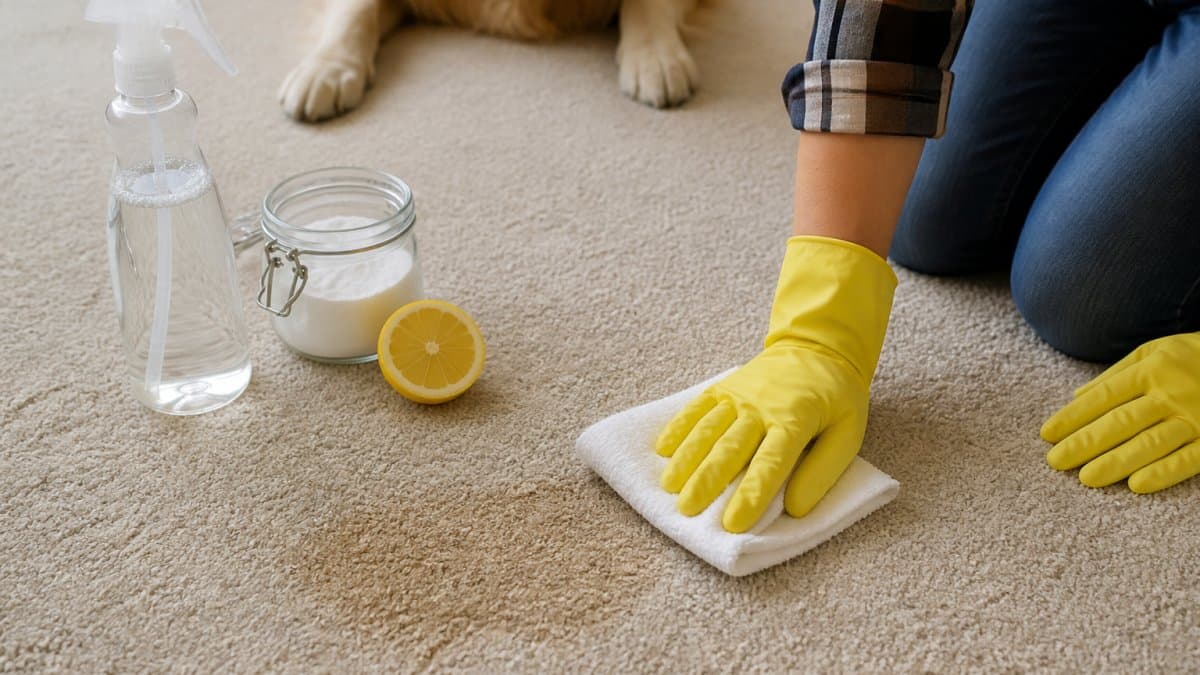
- Treat spots first. Blot spills with a clean cloth. Use a mild solution of warm water and a little vinegar or baking soda for odors. Test any product on a hidden patch of carpet first.
- Clean the zone. Use a low-moisture method if people need the floor back fast. Apply less solution than you think you need, and work in small sections so the carpet does not get soaked.
- Ventilate while you work. Open windows where possible, run fans, and keep the HVAC system circulating air. Good airflow speeds drying and reduces the chance that cleaning-product vapors linger in the workspace.
- Block it off until dry. Use cones or a sign until the carpet is dry to the touch. Damp carpet is a slip hazard, especially on hard transitions at doorways and elevator thresholds.
- Move to the next zone. Repeat until the floor is done.
Workplace safety and indoor air quality
Cleaning products are regulated, and the label is the authority on safe use. Follow the label's dilution ratio, ventilation requirements, and required protective equipment.
People with asthma, allergies, or chemical sensitivities can react to cleaning-product vapors even at low levels.
Watch out: over-wetting is the most common DIY mistake.
Watch out: never mix vinegar and baking soda in the same bucket. They cancel each other out, and you lose the cleaning power of both.
When in-hours DIY stops making sense
If the zone needs more than a light damp pass, or if the carpet stays damp for hours, move the work to after hours or call in a professional. In-hours cleaning works best for spot treatment, vacuuming, and low-moisture touch-ups.
For pricing before you commit, you can check instant cleaning pricing for floor, carpet, tile and air duct work.
Drying Times and Safe Re-Entry Guidance
Drying time is the number that decides when staff can walk on the floor again. Low-moisture methods dry in about 30 to 60 minutes.
Speed it up with these steps:
- Run fans and open windows where possible
- Keep the HVAC system circulating air
- Turn up ventilation in the cleaned zone
- Keep foot traffic off the carpet until it's dry to the touch
Safe re-entry matters for more than convenience. Damp carpet plus poor ventilation can trap moisture and affect indoor air quality, which is a real concern in offices with allergy-sensitive staff.
A simple test: press a white paper towel into the carpet. If you have questions about drying or re-entry, you can reach the steam cleaning team for guidance.
Professional Carpet Cleaning for Offices: When to Call In Help
Some jobs are worth handing off. Professional carpet cleaning for offices makes sense when the floor is large, heavily soiled, or tied to a deadline you can't miss.
Call in a pro when:
- Traffic lanes stay gray after vacuuming
- Stains return after spot treatment
- The carpet smells musty even when dry
- You need the whole floor cleaned overnight
- Mold or water damage is involved
Eco Friendly Steemers is licensed and insured and BBB accredited, and our team uses neutral, eco-friendly cleaning agents. We handle carpet, upholstery, tile, hardwood, and air duct cleaning for residential and commercial properties throughout Central Florida. You can also review the full commercial services we offer across Central Florida.
Request a Free Estimate for After-Hours Office Carpet Cleaning
After-hours cleaning can be less disruptive for many offices, since staff are out of the way during the work.
Our family-owned team has 20 years of experience.
To get moving, book carpet cleaning online for an after-hours slot, or request a written quote and we'll walk you through the options.
Frequently Asked Questions
Can office carpets be cleaned during business hours?
Yes, with the right method. Dry and low-moisture methods are often used in occupied zones because they allow quicker return to service, while hot-water extraction is commonly scheduled for after-hours. Plan around traffic lanes and peak meeting times, cordon off one area at a time, and keep drying equipment away from walkways. Most offices find a phased approach, cleaning a section at a time, keeps employees working while carpets still get cleaned properly.
How long does commercial carpet take to dry?
Drying time depends on the method and airflow. Low-moisture and dry cleaning can be walkable in under an hour, while hot-water extraction typically needs several hours with fans and ventilation running. Humidity, carpet thickness, and backing all affect how long it takes. Ask your provider for a realistic re-entry window for each zone, and keep HVAC running to speed drying and protect indoor air quality.
How often should office carpets be professionally cleaned?
Most offices benefit from professional deep cleaning every 6 to 12 months, with high-traffic areas and entryways cleaned more often. Vacuuming several times a week handles routine soil, but embedded dirt and stains need periodic extraction. Build a schedule around your traffic levels, carpet type, and any allergy or indoor air quality concerns, then adjust based on how quickly soil buildup returns.
What is the best commercial carpet cleaning method for a busy office?
There is no single best method; it depends on your carpet fiber, backing, and how much foot traffic the space sees. Low-moisture and dry methods suit occupied spaces and quick turnaround, while hot-water extraction handles heavy soil and deep stains. A professional assessment can match the method to each zone, so high-traffic lanes get deeper cleaning without forcing the whole office to shut down.
Cleaning office carpets without stopping work comes down to three habits: vacuum often, clean in zones, and match the method to your drying window. If you'd rather hand the whole job to a team that plans around your schedule, Eco Friendly Steemers offers eco-friendly carpet and floor care with licensed, insured technicians and a written quote before any work starts. Get started with Eco Friendly Steemers and keep your office open while your carpets get the deep clean they need.