Table of Contents
- Start with a Fresh Stain: Act Fast to Remove Pet Urine from Carpet
- How to Remove Dog Urine Smell from Carpet with a Vinegar and Baking Soda Treatment
- How to Clean Dried Dog Urine from Carpet: A Step-by-Step Method
- Vinegar and Baking Soda for Pet Urine on Carpet: How to Use Them Correctly
- When Natural Methods Fall Short: Pet Urine Odor in Carpet Padding
- Safety Tips for Pets, Children, and Carpet Materials
- Natural Methods vs. Enzyme Cleaners: Which Works Best?
- Frequently Asked Questions
Last Updated: October 13, 2026
Start with a Fresh Stain: Act Fast to Remove Pet Urine from Carpet
The faster you act, the more likely you are to learn how to remove pet urine from carpet naturally.
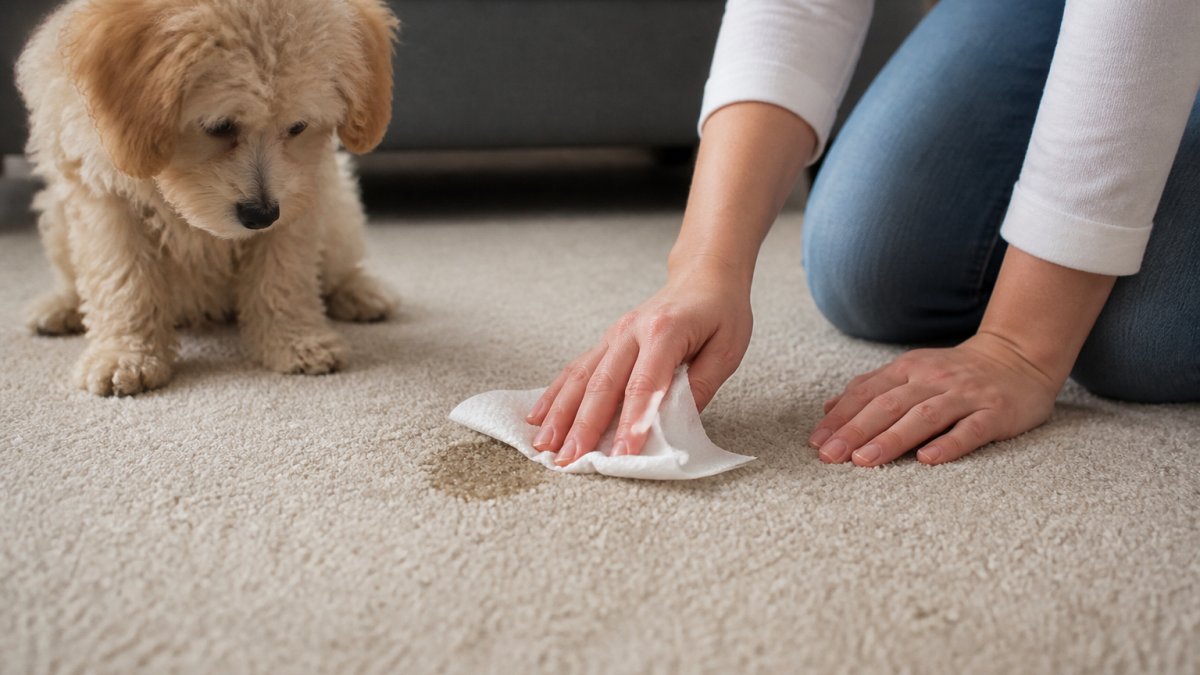
Once urine dries, the chemistry changes. The water evaporates, the salts concentrate, and the odor-causing residue binds to the fibers. That is why speed matters more than any single product you own.
Here is what to do in the first five minutes:
- Grab clean white cloths or paper towels. Colored towels can bleed dye onto damp carpet.
- Press down firmly on the stain. Do not rub, because rubbing pushes urine deeper into the backing.
- Stand on the cloth for 30 seconds to apply steady weight. This pulls liquid up and out.
- Repeat with fresh cloths until no more moisture transfers.
- Rinse the spot with cool water and blot again.
A common mistake is reaching for a steam cleaner right away. Heat can set the proteins in urine and make the smell harder to remove later.
How to Remove Dog Urine Smell from Carpet with a Vinegar and Baking Soda Treatment
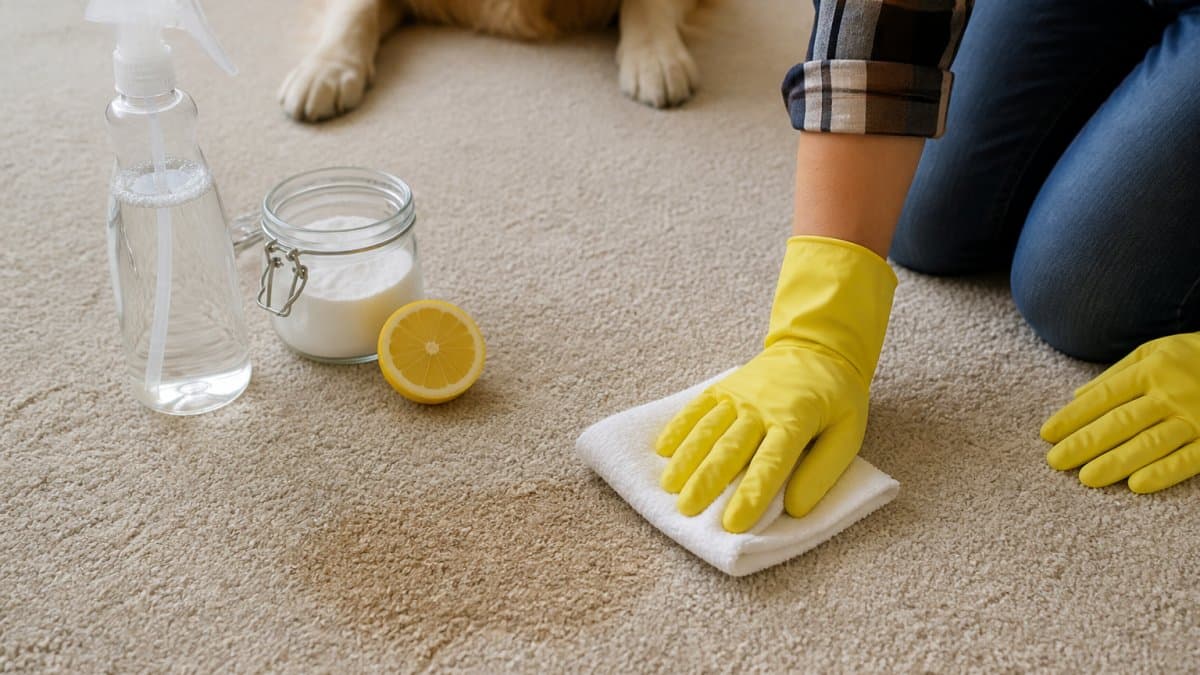
Knowing how to remove pet urine from carpet naturally with vinegar and baking soda works because the two ingredients attack the problem in different ways. Vinegar is acidic, so it helps neutralize the alkaline salts left behind in urine. Baking soda is mildly alkaline and hygroscopic, meaning it pulls moisture and odor molecules out of the fibers as it dries. Used in the right order and the right amounts, they handle fresh stains and light odor well.
The exact recipe
Vinegar solution (mix fresh each time):
- 1 cup distilled white vinegar (5% acidity)
- 1 cup cool water
- Optional: 2 to 3 drops of mild, fragrance-free dish soap to help lift oily residue
Pour into a clean spray bottle. Do not add baking soda to the bottle, the two react on contact and the mixture foams away most of its cleaning power.
Baking soda layer:
- 2 to 4 tablespoons of plain baking soda per spot, depending on size
- Enough to dust the area so it looks lightly frosted, not buried
Step-by-step
- Blot any remaining moisture with a clean white cloth first. The vinegar step works on residue, not on standing liquid.
- Spray the vinegar solution until the spot is damp to the touch, not soaked through to the backing.
- Let it dwell 5 to 10 minutes. This is the window where the acid neutralizes the alkaline urine salts.
- Blot with a clean cloth, pressing down rather than rubbing. Rinse the cloth or swap it out as it picks up residue.
- While the carpet is still slightly damp, sprinkle the baking soda in a thin, even layer.
- Leave it 4 hours minimum, or overnight for older stains. As it dries, it pulls odor out of the fibers.
- Vacuum once the powder is completely dry. Vacuuming damp powder drives it into the backing.
- Sniff the spot. If odor remains, repeat the full cycle once. If it still lingers after two rounds, the contamination is likely below the carpet, see the padding section below.
Why the order matters
Applying baking soda first and vinegar second reverses the chemistry. The baking soda absorbs surface moisture but never gets the acid contact it needs to neutralize salts, and the vinegar then re-wets powder you already vacuumed. Vinegar first, baking soda second.
Fiber and material cautions
- Wool and wool blends: Vinegar is acidic and can dull or damage wool over repeated use. Test on a hidden corner and dilute to 1 part vinegar to 3 parts water for wool.
- Solution-dyed nylon and polyester: Generally tolerant of the 1:1 mix.
- Rayon, viscose, and some natural fiber blends: Can be sensitive to both acid and moisture. Patch test first.
- Jute or natural-fiber backing: Moisture can cause browning or mildew. Keep the spot damp, never soaked.
Safety around pets and children
- Ventilate the room while spraying. Vinegar fumes are mild but noticeable in a closed space.
- Keep pets and kids off the treated area until the carpet is fully dry, usually 4 to 6 hours for the baking soda step.
- Never mix vinegar with bleach or ammonia-based cleaners. The reaction produces dangerous vapors.
- Store the spray bottle out of reach when you are done.
Pro Tip
If the smell returns on humid days, that is a sign urine reached the pad below. Surface treatments like this one cannot reach it, see the padding section further down.
Many homeowners find the smell returns on humid days. That usually means urine reached the pad below, which we cover further down.
How to Clean Dried Dog Urine from Carpet: A Step-by-Step Method
Dried stains need a different approach than fresh ones. The liquid is gone, but uric acid crystals and odor-causing residue stay locked in the carpet fibers. Rehydrating is the first job; breaking down the crystals is the second. Skipping either step is why dried stains often smell worse after cleaning than before.
How to Remove Set-In Urine Stains From Carpet (Dog or Cat)
The Stain Guide
First, decide which situation you have
Fresh (under 24 hours): Urine is still liquid or damp. Blot first, then run the standard vinegar-and-baking-soda cycle. One pass usually handles it.
Dried (24 hours to a few weeks): The spot is dry to the touch, may have a crusty edge, and smells stronger when you press down. Rehydrate before treating.
Old or repeatedly soiled (weeks to months, or the same spot hit more than once): The stain may be invisible from above but glows under a blacklight, and the odor returns within a day of cleaning.
Dried stain procedure
- Find the full extent. A UV blacklight shows dried urine as a yellow-green glow. If you do not have one, press a damp white cloth across the area, the cloth picks up residue where the stain reaches. Mark the edges with a piece of painter’s tape so you treat the whole area, not just the visible center.
- Rehydrate. Spray the spot with warm water (not hot) and let it sit 10 minutes. Warm water loosens the dried residue without setting the proteins the way steam or hot water can.
- Apply the vinegar solution. Use the 1:1 white vinegar and cool water mix from the recipe above. Spray until damp, dwell 10 minutes.
- Blot, do not scrub. Press a clean white cloth down, stand on it for 30 seconds, and lift. Swap cloths as they load up.
- Baking soda layer. Sprinkle 2 to 4 tablespoons over the damp spot and leave it 4 hours or overnight.
- Vacuum and check. Once fully dry, vacuum and smell the spot at nose level, then press down and smell again. Odor that only appears when you press means residue is still in the backing.
- Repeat if needed. Give it a 12-hour gap between rounds so the carpet dries fully. Two rounds is normal for dried stains; three is the practical ceiling for household methods.
Old or repeatedly soiled spots
For stains that have been there for weeks, or spots your pet keeps returning to, treat the area twice with a 12-hour gap between rounds. One pass rarely reaches the bottom of the carpet backing. If the odor still returns after the second round, the urine has almost certainly soaked into the pad, see the padding section below.
Pro Tip
Dwell time matters more than scrubbing. Give the solution time to break down proteins before you blot again. Scrubbing dried urine drives the crystals deeper into the backing.
When to stop treating and call it
If you have run the full cycle twice on a dried stain and the odor still returns within 24 hours, more surface treatment will not fix it. That pattern points to pad or subfloor contamination, which household remedies cannot reach.
Vinegar and Baking Soda for Pet Urine on Carpet: How to Use Them Correctly
Getting the ratio wrong is the most common reason natural treatments fail. Too much vinegar can leave its own smell.
Use these guidelines:
- Vinegar solution: 1 part white vinegar to 1 part water
- Baking soda layer: thin enough to see the carpet through it
- Dwell time: 5 to 10 minutes for vinegar, 4 or more hours for baking soda
- Rinse: always blot with cool water after the vinegar step
Never mix vinegar and baking soda in the same bottle. They react on contact and lose most of their cleaning power. Apply them in separate steps.
For lighter odors, dish soap can help. Add a few drops of mild dish soap to the vinegar solution to help lift oily residue.
When Natural Methods Fall Short: Pet Urine Odor in Carpet Padding
Pet urine odor in carpet padding is the reason some stains never seem to go away. The pad sits under the carpet and acts like a sponge.
Signs the pad is contaminated:
- The smell returns within a day of cleaning
- The odor is stronger when you press down on the spot
- A blacklight shows a wide, deep glow
- The carpet feels stiff or discolored from underneath
At that point, household remedies are not enough. This is where professional carpet cleaning makes a real difference.
At Eco Friendly Steemers, our team uses water extraction and neutral, eco-friendly cleansing agents to reach below the carpet surface.
Safety Tips for Pets, Children, and Carpet Materials
Natural does not automatically mean safe for every surface or every pet. A few precautions keep the process safe:
- Test any solution on a hidden corner of carpet first. Wool and some synthetics can react to vinegar.
- Keep pets and children off the treated area until it is fully dry.
- Never mix vinegar with bleach or ammonia-based cleaners.
- Ventilate the room while you work.
- Store the spray bottle out of reach when you are done.
If your pet has a medical condition, ask your vet before using any new product around them.
Natural Methods vs. Enzyme Cleaners: Which Works Best?
Natural methods work well for fresh stains and mild odors.
Here is how the two compare:
| Method | Best For | Limits |
|---|---|---|
| Vinegar and water | Fresh stains, light odor | Does not reach deep into the pad |
| Baking soda | Absorbing moisture, mild odor | Surface-level only |
| Dish soap | Oily residue on fibers | Can leave sticky film if not rinsed |
| Enzyme cleaner | Dried stains, deep odor | Needs longer dwell time |
| Professional extraction | Pad and subfloor contamination | Requires scheduling a visit |
For most homes, a natural first pass plus an enzyme cleaner for stubborn spots covers the job.
Watch Out
If the stain has soaked into the subfloor, no spray or powder will fix it. Ignoring this can lead to lasting odor and possible mold growth in humid climates.
Pet accidents test your patience, especially when the smell keeps coming back no matter what you try.
Eco Friendly Steemers offers professional water extraction, eco-friendly carpet cleaning, and odor treatment using neutral cleansing agents that are safe for your family and pets.
Request a free estimate from Eco Friendly Steemers and get your carpet smelling clean again.
Frequently Asked Questions
What can I use to remove pet urine from carpet naturally?
A white vinegar and water solution (equal parts) is a common natural option. After blotting, apply the solution, let it sit for 10 minutes, then blot dry. For odor, sprinkle baking soda over the area, let it sit for several hours, and vacuum. For dried stains, an enzyme cleaner may be needed to break down urine proteins. Always test any solution on a hidden spot first.
Does vinegar and baking soda remove pet urine from carpet?
Vinegar and baking soda can neutralize mild odors and lift some stains, but they do not break down urine proteins the way enzyme cleaners do. For fresh accidents, vinegar and baking soda may be enough. For older or set-in stains, especially those that have reached the carpet pad, an enzyme cleaner is more effective. Use vinegar and baking soda as a first step or for maintenance.
How can I tell if pet urine has soaked into the carpet padding?
If the odor returns after cleaning or you notice a dark ring that won’t lift, urine has likely reached the padding. Press a clean white cloth firmly onto the area and sniff; if it smells strongly, the pad is contaminated. In many cases, the affected padding must be replaced. A professional cleaner can assess the extent and recommend treatment or replacement.
When should I call a professional carpet cleaner for pet urine?
Call a professional if the stain is large, has been there for weeks, or if odor persists after several DIY attempts. Also, if urine has soaked into the pad or subfloor, professional extraction and treatment are needed. Eco Friendly Steemers offers eco-friendly cleaning and can assess the damage. Request a free estimate to discuss your situation.