Table of Contents
- Identify Your Floor Finish Before You Clean
- Remove Dust, Dirt, and Grit First
- How to Mop Hardwood Floors Without Damaging the Finish
- How to Clean Hardwood Floors Without Streaks
- Choosing the Best Hardwood Floor Cleaner for Your Home
- How Often to Clean Hardwood Floors
- Troubleshooting Common Hardwood Floor Problems
- Pet-Safe and Child-Safe Cleaning Options
- Frequently Asked Questions
Last Updated: October 14, 2026
Identify Your Floor Finish Before You Clean
To clean hardwood floors safely, first identify what finish protects your wood, each needs a different approach, and the wrong one damages the protective layer.
Most hardwood floors have one of three finishes: polyurethane (most common), wax, or oil-based sealers.
Here’s how to identify your finish:
- Drop water on an inconspicuous spot. If it beads up, you have polyurethane. If it soaks in, your floor is likely waxed or oiled.
- Look at the sheen. Polyurethane typically has a glossy or satin appearance. Waxed floors have a natural, duller look.
- Check your documentation. Your flooring paperwork or installer notes will specify the finish.
Identifying your finish before choosing a cleaning method is recommended, the wrong approach can leave streaks, dull the finish, or cause water damage.
Remove Dust, Dirt, and Grit First
Before mopping, remove all loose debris. Dust and grit are the biggest threats: mopping over grit makes particles act like sandpaper, and the micro-scratches accumulate and dull your finish.
Use these tools in order:
- Soft broom or dry mop. Sweep the entire floor with gentle, overlapping strokes.
- Microfiber dust cloth or dry mop. Go over the floor again; microfiber traps fine dust better than cotton.
- Vacuum with hard-floor attachment. Use the hard-floor setting without the beater bar, which can scratch wood, to catch debris in corners and along baseboards.
Never skip the dry step. Water and grit together create a paste that’s harder to clean and more damaging to finish.
How to Mop Hardwood Floors Without Damaging the Finish
The key to safe mopping is minimal water. Excess moisture seeps into wood, causing swelling, warping, and expensive finish damage.
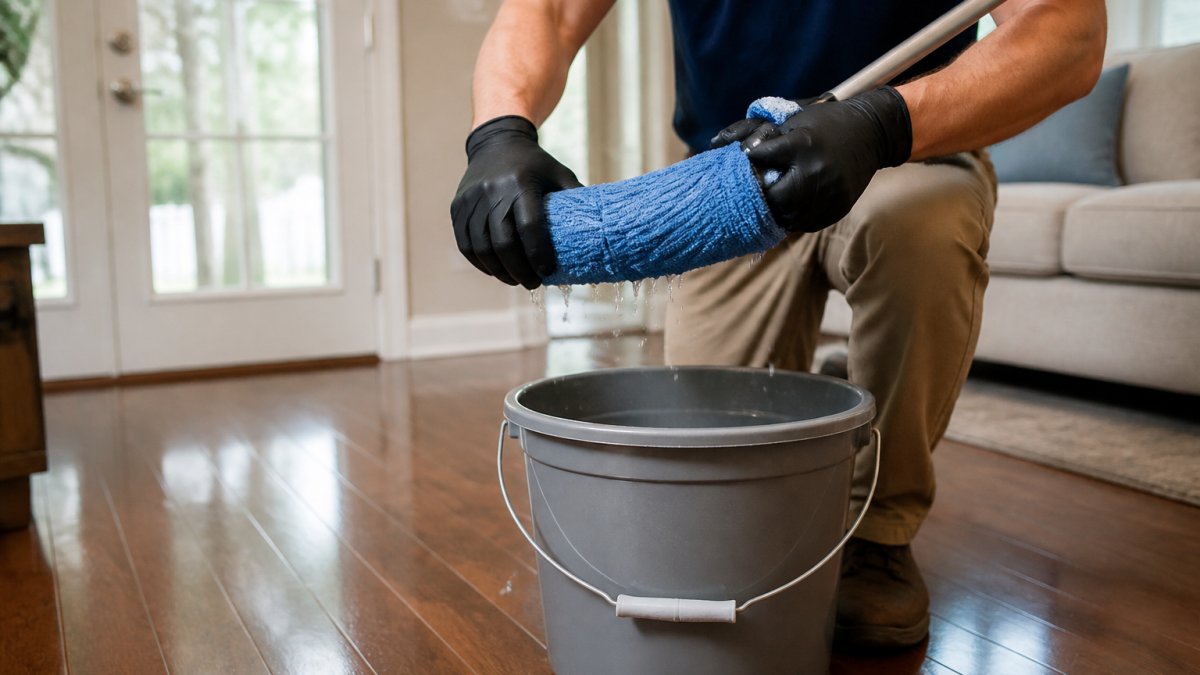
Follow this sequence for safe mopping:
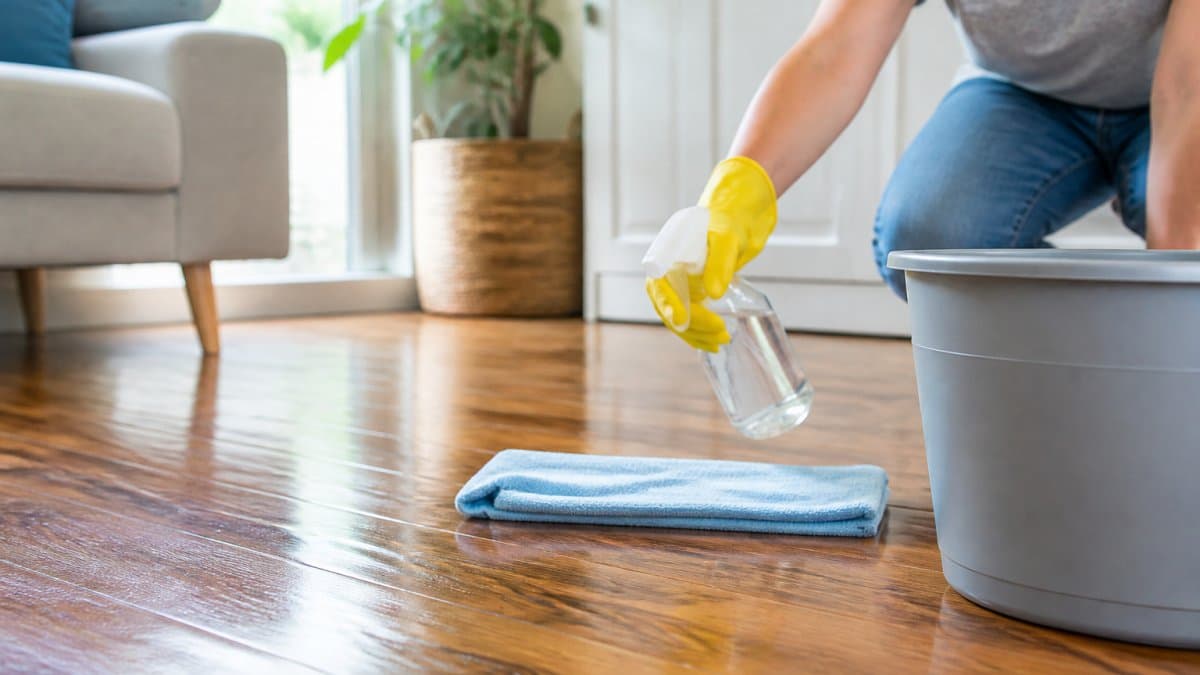
Fill a bucket with warm water and hardwood-safe cleaner. Use only products designed for sealed hardwood; general-purpose cleaners can strip finish or leave residue.
Wring out your mop thoroughly. It should be damp, not wet, squeeze until almost no water drips.
Mop in the direction of the wood grain. This helps water run off rather than seep into wood fibers. Use long, overlapping strokes.
Work in small sections. Clean a quarter of a room at a time so water never sits on the surface.
Dry immediately. Wipe each section with a clean, dry microfiber cloth to remove excess moisture and prevent streaks.
Ventilate the space. Open windows and doors so air circulation prevents trapped moisture.
Never let water pool on hardwood, wipe up spills and standing mop water immediately.
Watch Out
Excess water is the leading cause of hardwood floor damage. Even sealed hardwood can warp or develop white spots (water damage) if moisture sits on the surface. If you notice any swelling or discoloration after mopping, stop and let the floor dry for 24-48 hours. Persistent damage may require professional restoration.
How to Clean Hardwood Floors Without Streaks
Streaks and haze usually come from too much cleaner, residue left on the surface, or uneven drying. Residue becomes visible as the floor dries, so less is always better.
How To Clean Hardwood Floors the RIGHT Way!
Maker’s Clean
Here’s how to eliminate streaks:
- Use less cleaner than you think you need. A few drops in a bucket of water is often enough.
- Rinse your mop between passes. Dip it in clean water and go over the area again to remove residue.
- Dry the floor completely. Uneven drying creates streaks, so wipe each section with microfiber immediately after mopping.
- Mop in one direction only. Changing direction mid-section can trap moisture and create marks.
For existing streaks, mix equal parts white vinegar and water, spray lightly, and wipe with a dry cloth. Vinegar cuts residue without damaging finish, test on a hidden spot first.
Pro Tip
For stubborn haze or residue buildup from previous cleanings, use a microfiber mop dampened with plain water only (no cleaner). Sometimes the best solution is letting the floor dry completely and starting fresh with minimal product next time.
Choosing the Best Hardwood Floor Cleaner for Your Home
Not all cleaners are safe for hardwood, the wrong product can strip finish, leave residue, or damage wood over time. The right choice depends on the finish you identified earlier, not the word “hardwood” on the label.
Match the Cleaner to the Finish
| Finish type | Safe cleaners | Avoid |
|---|---|---|
| Polyurethane (surface-sealed) | pH-neutral hardwood cleaners, diluted white vinegar (1:1 with water) for light soil | Oil soaps, wax, ammonia, abrasive powders |
| Wax | Wax-compatible cleaners or a fresh coat of paste wax; buff after cleaning | Water-based detergents, vinegar in high concentrations (they dull wax) |
| Oil-sealed / penetrating oil | Rejuvenating oil or a manufacturer-matched cleaner; re-oil periodically | Soap-based cleaners, all-purpose sprays |
| Engineered wood | Same as its top layer finish (usually polyurethane); minimal moisture | Steam mops, soaking wet mops, oil soaps on aluminum-oxide finishes |
| Unfinished wood | Dry methods only; consult a flooring professional before any liquid | Any water-based cleaner |
If you don’t know your finish, test in a closet or behind a door: apply a little cleaner, let it dry fully, and check for dulling, tackiness, or color change before using it across the room.
What to Look For on the Label
- Designed for sealed hardwood. The label should name your finish type (polyurethane, wax, or oil). “Works on all hard surfaces” is a red flag.
- pH-neutral or slightly acidic. Alkaline cleaners (pH above 8) can dull polyurethane over repeated use.
- No added wax or silicone. These build up in layers, trap dirt, and create haze weeks later.
- Minimal residue. Water-thin, low-surfactant formulas dry clear. If reviews mention “sticky” or “cloudy,” skip it.
When Your Preferred Cleaner Isn’t Available
You don’t need a specialty product for every cleaning. Safe substitutes, in order of preference:
- Plain water on a barely damp microfiber mop, handles light dust and fresh spills on any sealed finish.
- 1:1 white vinegar and water, cuts light residue on polyurethane and engineered wood. Skip on wax.
- A few drops of mild dish soap in a quart of water, for sticky spots. Rinse with plain water afterward.
- Baking soda paste, for spot stains only, never whole-floor cleaning.
Mistakes That Damage Finish
- Oil-based polishes (they build up and become slippery)
- Wax products on polyurethane floors (they don’t bond and create buildup)
- All-purpose or bathroom cleaners (too harsh for delicate finishes)
- Soap-based products (they leave a dulling film)
Pro Tip
Test any new cleaner on a small, hidden area first. Let it dry completely and check for streaks, residue, or dull spots before using it on the entire floor. Keep a dated note of what you used so you can trace any haze back to its source.
Eco-friendly hardwood cleaners are tough on dirt and stains yet safe for your family and pets, without the harsh fumes or residue of conventional options.
How Often to Clean Hardwood Floors
Most guides give a single schedule, but frequency should track three variables: traffic, finish type, and indoor humidity. Get those right and you’ll clean less and damage less.
Start With Traffic
| Household | Dry clean (sweep/dust mop) | Damp mop |
|---|---|---|
| 1-2 adults, no pets | 2-3× per week | Every 2-3 weeks |
| Family with kids or one pet | 3-4× per week | Weekly |
| Multiple pets or kids under 5 | Daily in high-traffic zones | Weekly, plus spot-clean daily |
| Entryways, kitchens, mudrooms | Daily | 1-2× per week |
Dry cleaning is the workhorse: grit scratches finish and accumulates fast, one pair of shoes can track in fine sand that acts like sandpaper under a mop.
Adjust for Finish Type
- Polyurethane (surface-sealed): Tolerates weekly damp mopping, the most forgiving finish.
- Wax: Damp mop sparingly, every 3-4 weeks at most, since wax dulls with repeated moisture. Buff with a dry cloth instead, and re-wax every 6-12 months depending on traffic.
- Oil-sealed / penetrating oil: Damp mop weekly with a manufacturer-matched cleaner, and re-oil every 6-12 months.
- Engineered wood: Treat like its top-layer finish, but be stricter about moisture, the wear layer is thin and refinishing options are limited.
Adjust for Humidity and Season
Wood expands and contracts with airborne moisture; 35%-55% indoor relative humidity keeps most floors stable. Outside that range, adjust:
- Winter (dry air, forced heat): Floors shrink, seams open, and grit settles into gaps. Dust mop more often; damp mop less. A whole-home humidifier helps more than extra cleaning.
- Summer (humid air): Floors swell and seams tighten. Reduce damp mopping and dry each section immediately. Run AC or a dehumidifier to keep humidity in range.
- After rain or snow: Wipe entryway floors daily. Winter salt and grit are the biggest cause of finish scratches in cold-climate homes.
The Real Rule
Sweep or dry mop frequently (2-3 times weekly, more in high-traffic zones) and damp mop less often (weekly to every 2-3 weeks depending on traffic and finish). Frequent light cleaning prevents heavy cleaning, which is better for your finish.
Key Takeaway
If you’re unsure whether your floor needs a damp mop, run a white cloth across a two-foot section. If the cloth comes up clean, skip the mop. If it’s gray or gritty, dry clean first, then damp mop only if residue remains.
When to Stop and Call a Professional
Some signs mean cleaning won’t help, and continuing can make things worse:
- Cupping or crowning (edges or centers higher than the rest of the board), moisture has entered the wood.
- Peeling, flaking, or whitening finish, the coating is failing, not dirty.
- Persistent discoloration that doesn’t lift after two gentle attempts.
- Soft or spongy spots underfoot.
- Widespread scratches that expose raw wood.
In any of these cases, stop cleaning and have a flooring professional assess the floor. Continued mopping can drive moisture deeper and turn a refinishable floor into one needing board replacement.
Troubleshooting Common Hardwood Floor Problems
White spots, dark stains, and dull patches happen to most hardwood floors.
White spots or haze usually indicate water damage or cleaner residue.
Dark stains from spills or pet accidents need prompt treatment.
Dull or cloudy patches often come from buildup, old wax, product residue, or dust.
Scratches are inevitable with hardwood.
Cupping or warping (edges higher than center, or visible waves) indicates moisture damage.
Pet-Safe and Child-Safe Cleaning Options
Safe cleaning alternatives:
- Plain water and white vinegar. Mix equal parts in a spray bottle for light cleaning and residue removal without chemicals. Vinegar’s strong smell fades as it dries.
- Water and a few drops of dish soap. Use minimal soap to avoid residue; safe for pets and children and effective on light soil.
- Baking soda paste. For spot stains, mix baking soda with water, rub gently, let sit a few minutes, then wipe clean. It’s abrasive, so avoid large areas.
- Commercial eco-friendly hardwood cleaners. Formulated to be safe for families and pets while still effective on sealed hardwood.
Avoid bleach, ammonia, and harsh chemical cleaners, they irritate respiratory systems and are dangerous if ingested, even in small amounts.
Keeping hardwood floors clean and protected comes down to knowing your finish and following three rules: sweep first, use minimal water, and dry immediately.
If your hardwood floors need professional cleaning or restoration, Eco Friendly Steemers offers safe, eco-friendly hardwood floor cleaning using sustainable methods.
Frequently Asked Questions
What is the best product to use when you clean hardwood floors safely?
Eco-friendly, pH-neutral cleaners designed specifically for hardwood are safest. These products clean effectively without stripping the finish or leaving residue. Always check your flooring manufacturer’s recommendations first. Eco Friendly Steemers uses sustainable, non-toxic solutions that work on dirt and stains while protecting your family and pets.
How much water should you use when mopping hardwood floors?
Use minimal water, your mop should be damp, not wet. Wring it out thoroughly so it’s barely moist before applying it to the floor. Standing water and excess moisture are the primary causes of water damage, warping, and finish failure. A damp mop removes dirt and grime without pooling liquid on the surface. If you notice any water sitting on the floor, wipe it dry immediately with a soft cloth.
How often should you clean hardwood floors?
Sweep or dust 2-3 times per week to remove surface dirt and grit before they scratch the finish. Mop every 1-2 weeks depending on foot traffic and household activity. Homes with pets or children may need more frequent sweeping. High-traffic areas like entryways need attention more often. Spot clean spills immediately by blotting with a dry cloth, then wiping with a barely damp mop.
Can you use vinegar to clean hardwood floors?
Vinegar can be too acidic for some sealed hardwood finishes, potentially causing dullness or etching over time. It may work on some pre-finished commercial floors, but for most residential hardwood, pH-neutral, hardwood-safe cleaners are often preferred. If you’re unsure about your floor’s finish, test any cleaner in an inconspicuous corner first, or consult the flooring manufacturer’s care instructions.