Table of Contents
- Act Immediately: First Steps to Prevent Mold After Water Damage
- Stop the Water Source and Remove Standing Water
- How to Dry Out a House After Water Damage
- How Quickly Mold Grows After Water Damage
- Mold Cleanup Steps and Disinfection
- When to Call a Water Damage Restoration Company
- Safety Precautions Before and During Cleanup
- Material-Specific Salvage and Drying Targets
- Frequently Asked Questions
Last Updated: October 16, 2026
Act Immediately: First Steps to Prevent Mold After Water Damage
Water damage creates an urgent timeline. Mold can begin growing within 24-48 hours of water exposure, so your first actions matter most (the CDC).
The moment you discover water damage, your goal is simple: stop the source, remove standing water, and start drying. These three steps form the foundation of mold prevention.
Here’s what to do right now:
- Turn off the water supply if the leak comes from plumbing
- Locate the source of water entry (burst pipe, roof leak, foundation crack, storm damage)
- Move wet items away from affected areas to prevent mold spread
- Document everything with photos for insurance claims
- Open windows and doors to begin air circulation (if weather permits)
- Call a professional if water covers more than a small area or if you cannot safely access the source
Most homeowners delay professional help, thinking they can handle it alone. This is where mold prevention fails. Professional water extraction removes water that seeps into walls, flooring, and insulation, places you cannot see. Without extraction, hidden moisture becomes hidden mold.
Stop the Water Source and Remove Standing Water
Preventing mold starts with stopping the water. Find the source and shut it down immediately. For burst pipes, locate your main water shutoff valve. For roof leaks, you may need to place buckets temporarily until a roofer arrives. For foundation cracks or storm surge, block entry points with sandbags or tarps while waiting for professional help.
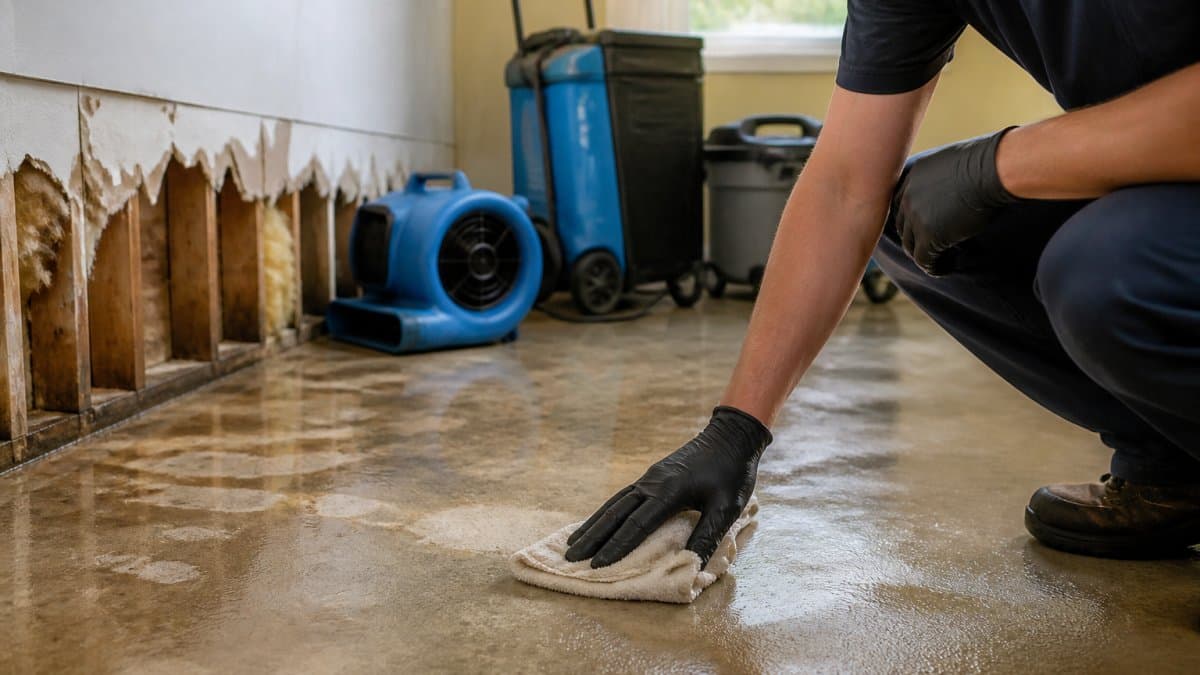
Once the source stops, remove standing water. This is the second critical step. Water sitting on your floor, in your carpet, or pooling in low areas feeds mold growth. Use a wet/dry vacuum to extract water from hard surfaces. For larger volumes, a submersible pump moves water faster.
Remove soaked materials carefully:
- Carpet and padding should be pulled up and discarded if saturated for more than 24 hours
- Drywall absorbs water and becomes a mold breeding ground; remove wet sections
- Insulation cannot be dried safely and must be replaced
- Wood flooring may be salvageable if dried quickly; hardwood is more resilient than particle board
- Soft furnishings like mattresses, cushions, and upholstered furniture are difficult to dry and often must be discarded
The goal is to remove materials that retain moisture. Hard surfaces like tile, concrete, and sealed wood can be cleaned and dried. Porous materials hold water deep inside, where mold thrives even after the surface feels dry.
How to Dry Out a House After Water Damage
Drying is where you prevent mold water damage. Wet materials sitting idle become moldy materials. Your job is to remove moisture from the air and from affected surfaces as quickly as possible.
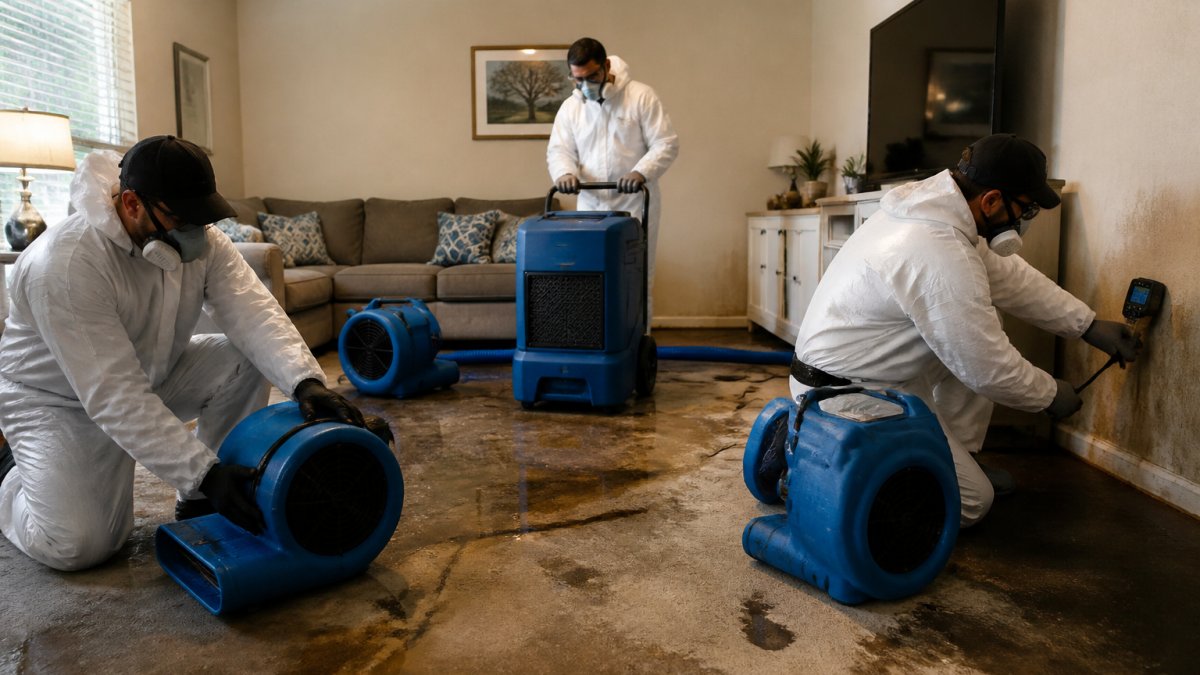
Professional water damage restoration companies use industrial-grade equipment that homeowners cannot rent. A standard household dehumidifier removes roughly 30 pints of water per day. A commercial dehumidifier removes 150+ pints per day. The difference is speed, and speed prevents mold.
Use Fans and Air Movers
Air movers push moisture away from surfaces and into the air, where dehumidifiers can capture it. Position fans to create air flow across wet areas. Do not point a single fan at one spot; instead, create circulation that moves air through the entire room.
Fans work best when combined with dehumidifiers. A fan alone moves wet air around but does not remove the moisture. A dehumidifier alone removes moisture slowly. Together, they accelerate drying dramatically.
Set up fans to:
- Aim across wet flooring at a low angle to push moisture toward the center of the room
- Point at wet walls to dry drywall and insulation
- Create cross-ventilation by opening windows and using fans to push moist air outside
- Run continuously for 48-72 hours minimum after water extraction
Deploy Dehumidifiers for Moisture Control
Dehumidifiers pull moisture from the air. As air passes through the unit, water condenses on cold coils and drains away. The dry air returns to the room. Repeat this cycle dozens of times per day, and humidity drops from 90%+ down to safe levels (below 50%).
Humidity control is how you prevent mold. Mold needs moisture to grow. Remove the moisture, and mold cannot establish.
Place dehumidifiers in:
- The room with the most water damage (primary unit)
- Adjacent rooms where moisture has migrated through walls
- Basements where humidity naturally rises
- Crawl spaces if accessible
Empty dehumidifier buckets or connect drainage hoses to avoid overflow. Check humidity levels daily using an inexpensive humidity meter. Target 30-50% humidity for mold prevention.
Check for Hidden Moisture
Moisture trapped inside walls, under flooring, or in insulation becomes hidden mold. You cannot see it growing, but it is there. This is why professional inspection is critical.
Professionals use moisture meters and thermal imaging to detect water where your eyes cannot. A moisture meter reads the water content of drywall, wood, and insulation. Thermal imaging shows cold spots where moisture evaporates, revealing wet areas behind walls.
Check hidden moisture in:
- Wall cavities behind drywall (especially near the water line)
- Under flooring in crawl spaces or basements
- Inside insulation in attics and exterior walls
- Behind baseboards and trim
If moisture readings remain above 20% after 48 hours of drying, the material is still too wet. Continue running fans and dehumidifiers. If readings do not drop after 72 hours, the material likely needs replacement.
How Quickly Mold Grows After Water Damage
Mold spores are everywhere, in the air, on surfaces, in your home right now. They are dormant and harmless. Add moisture, and they activate. Mold can begin growing within 24-48 hours of water exposure.
How to Prevent Mold After Water Damage (7 Steps)
RestoPros of Tampa-St. Pete
This timeline is not theoretical. It is based on how mold biology works. Spores need three things: moisture, oxygen, and an organic food source (wood, drywall, fabric). Your wet home provides all three. The race is on.
By day 3-5, visible mold colonies appear on porous materials. By day 7-10, mold spreads aggressively. By day 14, mold has colonized large areas and begins releasing spores into the air.
The timeline changes based on temperature and humidity. Warm, humid conditions (above 70°F and 60% humidity) accelerate mold growth. Cool, dry conditions slow it. But mold will grow if given time.
This is why waiting is dangerous. Every hour of delay increases mold risk. Professional water extraction and drying within 24-48 hours prevents most mold problems. Waiting a week almost guarantees mold will appear.
Mold Cleanup Steps and Disinfection
If mold appears despite prevention efforts, cleanup must be thorough. Surface cleaning alone does not work. Mold roots grow deep into materials.
For small mold patches (less than 10 square feet):
- Wear a respirator mask to avoid inhaling spores
- Spray affected areas with a detergent solution or white vinegar
- Scrub thoroughly with a stiff brush to remove mold colonies
- Dry completely with fans and dehumidifiers
- Discard porous materials (drywall, insulation, carpet) that cannot be fully cleaned
For large mold growth (more than 10 square feet), professional mold remediation is required. Professionals contain the affected area, remove contaminated materials, and apply antimicrobial treatments to prevent regrowth.
Disinfection prevents mold from returning:
- Use EPA-approved antimicrobial products on hard surfaces after cleaning
- Replace insulation in affected walls (it cannot be disinfected)
- Seal repaired areas to prevent moisture re-entry
- Monitor humidity for 30 days after cleanup to ensure mold does not return
When to Call a Water Damage Restoration Company
You need professional help if:
- Water covers more than a small area (more than a few square feet)
- Water came from outside sources (storm surge, groundwater, sewage)
- Water is still present after 24 hours of your own extraction attempts
- Humidity remains above 60% after 48 hours of fans and dehumidifiers
- Mold appears on any surface
- Walls, insulation, or subflooring are wet (you cannot dry these yourself)
- You have health concerns (asthma, allergies, immunocompromised household members)
Professional water damage restoration companies have industrial equipment, trained technicians, and experience with insurance claims. They extract water completely, dry materials thoroughly, and prevent mold before it starts.
Eco Friendly Steemers provides water extraction, mold remediation, and sustainable drying solutions. Our licensed and insured team uses professional-grade equipment and eco-friendly processes to restore your home safely. We offer a 3-day guarantee on flood and water damage services, meaning we return to verify that drying is complete and mold prevention is successful. Request a free estimate to get started.
Safety Precautions Before and During Cleanup
Water damage creates hazards beyond mold. Contaminated water, electrical risks, and structural damage require careful handling.
Before entering a water-damaged area:
- Turn off electricity to affected rooms if water is present
- Wear protective gear: gloves, boots, and a respirator mask for mold exposure
- Assume water is contaminated until proven otherwise (it may contain sewage, chemicals, or bacteria)
- Check for structural damage before walking on floors or entering crawl spaces
- Ventilate continuously by opening windows and running fans
- Never mix cleaning products (especially bleach and ammonia)
- Keep children and pets away from affected areas during cleanup
Contaminated water (black water from sewage or flooding) requires professional handling. Do not attempt cleanup yourself. Exposure to sewage-contaminated water causes serious infections.
Electrical hazards are real. Water conducts electricity. Do not use standard electrical equipment in wet areas. Turn off the main breaker if water is widespread.
Material-Specific Salvage and Drying Targets
Different materials require different drying approaches. Some can be saved; others must be discarded.
Hardwood flooring: Hardwood can be salvaged if dried quickly. Target moisture content below 12%. Use fans and dehumidifiers for 5-7 days.
Drywall: Drywall absorbs water like a sponge. If wet for more than 24-48 hours, mold will grow inside. Remove and replace wet drywall.
Carpet and padding: Carpet padding traps water and becomes a mold incubator. Discard saturated padding.
Insulation: Fiberglass and cellulose insulation cannot be dried safely. Remove and replace. Wet insulation loses its thermal value and becomes a mold breeding ground.
Wood framing: Structural wood (studs, joists, beams) can be dried if moisture content drops below 20%. Use fans, dehumidifiers, and heat to accelerate drying.
Concrete and masonry: Concrete is porous and retains moisture deep inside. Dry thoroughly with dehumidifiers and ventilation. Use a moisture meter to verify drying.
Dryness verification: Use a moisture meter to confirm materials are dry before sealing or painting.
Water damage is a race against mold. We offer a 3-day guarantee on all flood and water damage services. REQUEST FREE ESTIMATE to get a professional assessment and custom quote for your situation.
Frequently Asked Questions
What should I do immediately after water damage to prevent mold?
Act within the first 24 hours. Stop the water source, remove standing water using pumps or wet vacuums, open windows for ventilation, and begin drying affected areas with fans and dehumidifiers. Document everything with photos for insurance. The faster you remove moisture, the lower your mold risk. If water damage is extensive or affects multiple rooms, contact a professional water damage restoration company immediately, they have industrial-grade equipment to extract water and control humidity faster than DIY methods.
How quickly can mold grow after water damage?
Mold spores can begin germinating within 24-48 hours of water exposure if moisture persists. Visible mold growth typically appears within 3-7 days in humid, warm conditions. This is why immediate drying is critical. If you notice any musty odors or visible growth within the first week, increase ventilation and dehumidification, and consider professional assessment. Porous materials like drywall and carpet are especially vulnerable and may require removal if drying targets are not met within 72 hours.
Does water damage always turn into mold?
Not if you act quickly and thoroughly. Mold requires three conditions: moisture, warmth, and time. By removing standing water, controlling humidity below 50%, and ensuring complete drying within 48-72 hours, you can prevent mold growth entirely. However, if water sits unchecked or drying is incomplete, mold becomes likely. Hidden moisture behind walls or under flooring is particularly risky because it dries slowly and goes undetected. Professional moisture detection can identify these problem areas before mold takes hold.
When should I call a water damage restoration professional?
Call immediately if water damage affects more than one room, involves contaminated water (sewage, floodwater), or if you cannot dry the area within 48 hours. Professionals have industrial water extraction equipment, dehumidifiers, and moisture detection tools that work far faster than consumer equipment. They also document the process for insurance claims and can identify hidden moisture you might miss. If drying targets are not being met after 48 hours of effort, professional intervention prevents costly mold remediation later.