Last Updated: November 7, 2026
Quick Summary
The safest floor cleaners for crawling babies are gentle, pH-neutral, fragrance-free products labeled for your specific floor type, used sparingly and rinsed or wiped dry. Crawling babies touch and mouth surfaces often, so low residue matters more than strong cleaning power. Avoid disinfectants for everyday use.
- Choose a pH-neutral, fragrance-free cleaner labeled for your specific floor type.
- Fragrance can hide undisclosed chemicals, so pick products labeled fragrance-free.
- Use the least cleaner needed, since concentrated or over-applied product leaves more residue.
- Reserve disinfectants for targeted use after illness, not daily floor cleaning.
- Keep floors dry and ventilated until fully dry before babies crawl on them again.
Table of Contents
- Why Crawling Babies Need Cleaner Floors
- What Makes a Floor Cleaner Safe for Babies
- Best Baby Safe Floor Cleaner Options to Consider
- Homemade Baby Safe Floor Cleaner Recipes and Their Limits
- Matching the Cleaner to Hardwood, Tile, and Sealed Floors
- Floor Cleaning Tips for Crawling Babies
- Choosing a Non-Toxic Floor Cleaner for Babies and Booking Your Next Clean
- Frequently Asked Questions
Crawling babies spend their days with their faces close to the floor, touching, mouthing, and rubbing their hands over every surface they reach. That makes the choice of floor cleaner a real safety decision, not just a matter of appearance. Parents often ask which products are safe, how much residue is too much, and whether natural cleaners actually clean. This guide answers those questions and explains how to choose safest floor cleaners for crawling babies without guesswork.
Why Crawling Babies Need Cleaner Floors
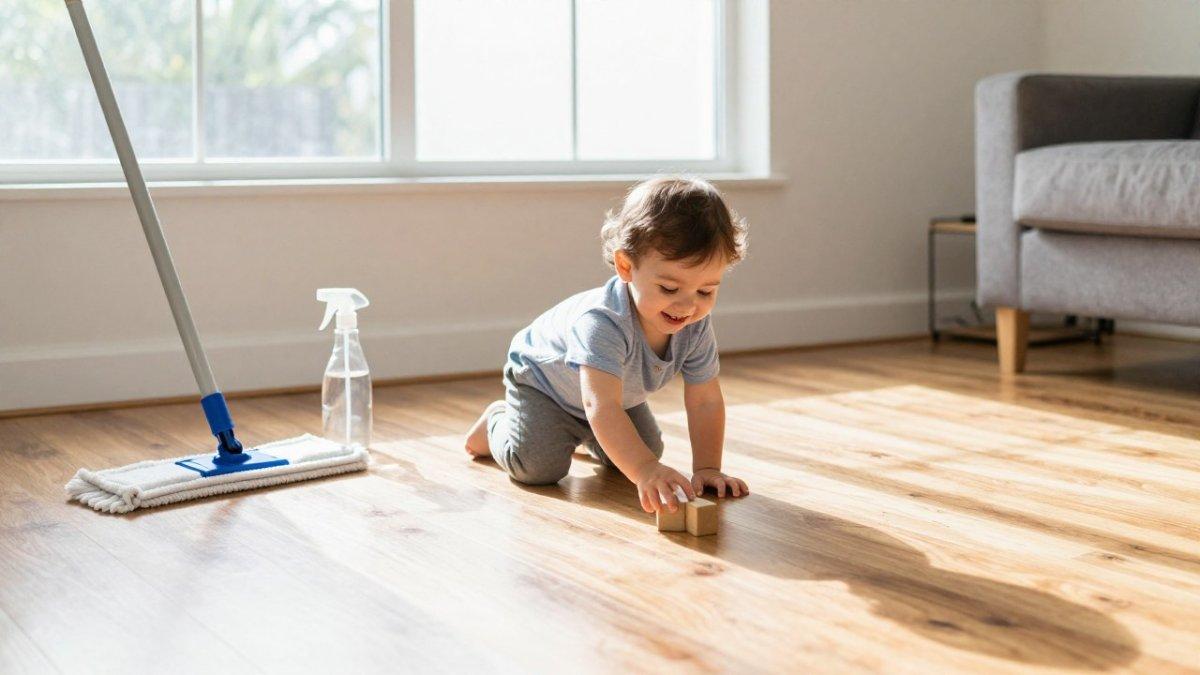
Crawling babies bring their hands to their mouths far more often than adults do, which is why choosing the safest floor cleaners for crawling babies matters so much. Floor residue that would be harmless to an adult can be transferred directly to a baby's skin and mouth during play.
A clean floor is not the same as a disinfected floor, and it is not the same as a residue-free floor. The goal is a surface that looks and smells clean, with as little leftover product as possible.
What Makes a Floor Cleaner Safe for Babies
No cleaner is risk-free, but some are a much better fit for homes with infants. The most useful way to judge a product is to look at its ingredients, its label, and how it is used.
Reading Ingredient Labels and Safety Claims
Words like "natural" and "eco-friendly" are not regulated in a way that guarantees safety. Look for a full ingredient list rather than a marketing headline. Fragrance can hide a long list of undisclosed chemicals, so unscented products generally reduce exposure. Check the label for dilution instructions, rinse requirements, and any warnings about ventilation.
Be cautious with products that claim to disinfect, since disinfectants are designed to kill germs and typically contain stronger active ingredients. For everyday floor care, a gentle cleaner is usually enough.
Cleaning Versus Disinfecting
Cleaning removes dirt, grit, and sticky residue. Disinfecting kills microorganisms and usually requires a product with a registered disinfecting claim, used exactly as the label directs, including contact time. Most families only need regular cleaning for floors, with disinfecting reserved for surfaces that are heavily contaminated, such as after an illness. Using a disinfectant every day on a play area increases exposure without adding much benefit.
Best Baby Safe Floor Cleaner Options to Consider
A useful method is to evaluate every candidate against the same criteria, then match the choice to your floor type.
Five criteria to score any floor cleaner
- Full ingredient disclosure. A label that lists every ingredient, including fragrance components, is more trustworthy than one that lists only actives. Some products are listed in the Environmental Working Group (EWG) database or carry a Safer Choice label from the U.S. Environmental Protection Agency (EPA), which can serve as an independent reference point. Neither label is a guarantee of zero risk.
- Fragrance status. "Fragrance" on a label can stand in for dozens of undisclosed compounds. Unscented or fragrance-free formulas reduce one exposure route for a baby whose face is near the floor. Note that "unscented" can still contain masking fragrance; look for "fragrance-free."
- Residue profile. Cleaners that are designed to be rinsed or that dry without a film leave less for a baby to pick up on hands and knees. Dilution ratios matter here: a concentrated cleaner used at half strength can leave more residue than a ready-to-use product used as directed.
- Surface suitability. The label should name the floor types the product is made for. A formula marketed for tile and grout may dull a sealed hardwood finish, and a wood-specific cleaner may not cut kitchen grease.
- Cost per use. Compare diluted cost, not sticker price. A concentrate that makes 32 gallons costs far less per mopping than a ready-to-use spray, and the difference is often large enough to change which product is the better value.
How to read a label in under a minute
Start with the back, not the front. Look for a full ingredient list, a dilution table, a rinse instruction, and any signal word such as "Caution" or "Warning." A signal word is not automatically disqualifying, but it tells you the product requires more care with ventilation and storage. Check for a U.S. EPA registration number if the product claims to disinfect; a cleaning-only product will not have one. Finally, look for a manufacturer care line or website where you can confirm the product is compatible with your specific flooring.
What to look for by category
- General hard-surface cleaners: Choose a pH-neutral, fragrance-free formula with a short ingredient list and a rinse step. These are the default for play areas.
- Wood-specific cleaners: Look for a pH-balanced product labeled for sealed wood, applied with a damp, not wet, mop.
- Disinfectants: Reserve these for targeted use after illness or on heavily soiled surfaces. They require label-directed contact time and a clear re-entry interval, and they are not a substitute for routine cleaning.
- Plant-based or "green" formulas: These can be good choices, but plant-derived ingredients are not automatically safer. Evaluate them against the same five criteria.
Watch out: a product that claims to be safe on every surface is a warning sign, not a selling point. No single formula is ideal for sealed hardwood, vinyl, stone, and tile at once.
Before buying, ask the manufacturer or retailer for the full ingredient list and the surface-compatibility statement. If either is missing, keep looking.
Homemade Baby Safe Floor Cleaner Recipes and Their Limits
Many parents make their own floor cleaners from distilled white vinegar, baking soda, and water. These mixtures can clean grime and odors, and they avoid added fragrance. However, they have real limits.
Vinegar is acidic and can dull or damage some finishes, including certain sealed stone, natural stone, and some wood floor coatings. Baking soda is abrasive and can leave a film or scratch softer surfaces.
Homemade cleaners are not tested for consistent results, so their effectiveness and safety depend on proportions and the surface. If you use one, test it in an inconspicuous spot first and rinse the floor with clean water afterward.
Matching the Cleaner to Hardwood, Tile, and Sealed Floors
Floor-material compatibility is the gap most baby-safe cleaning guides skip. A cleaner that is gentle on a baby can still ruin a floor, and a cleaner that protects the finish can leave residue if it is over-applied. The table below summarizes the practical differences; the notes after it explain the mechanism behind each recommendation.
| Floor type | Best cleaner profile | What to avoid | Application note |
|---|---|---|---|
| Sealed hardwood | pH-neutral, wood-specific, fragrance-free | Vinegar, ammonia, oil soaps on urethane finishes, standing water | Barely damp mop; dry within minutes |
| Laminate | pH-neutral, low-residue, no wax | Abrasive powders, steam, excess liquid at seams | Mist lightly; do not flood |
| Ceramic and porcelain tile | Mild alkaline or neutral cleaner | Acidic cleaners on grout, bleach-heavy formulas | Rinse grout to prevent film |
| Vinyl and luxury vinyl plank (LVP) | pH-neutral, no wax, no abrasives | Solvent-based cleaners, steam | Damp mop only; avoid seams |
| Natural stone (marble, travertine, limestone) | Stone-specific, pH-neutral | Vinegar, lemon, acidic bathroom cleaners | Wipe dry to prevent etching |
| Sealed concrete | Mild neutral cleaner | Acidic cleaners that etch the sealer | Rinse and dry |
Why the chemistry matters
Sealed hardwood and laminate finishes are sensitive to pH extremes and to standing water.
Tile itself is durable, but grout is porous. Mild alkaline cleaners lift grease without attacking grout, while acidic cleaners can erode grout over repeated use.
Natural stone is the most unforgiving surface. Marble, travertine, and limestone react with acids, so vinegar and lemon-based cleaners can etch the surface permanently.
Vinyl and LVP tolerate mild cleaners but not solvents or steam, which can lift adhesive at seams. Sealed concrete is forgiving but still benefits from a neutral cleaner and a rinse.
A simple decision path
- Identify the floor type and whether the finish is sealed.
- Check the manufacturer's care instructions for that specific product line.
- Choose a pH-neutral, fragrance-free cleaner labeled for that floor type.
- Test in an inconspicuous spot, especially on stone and wood.
- Use the least amount of cleaner, rinse or wipe dry, and ventilate.
Watch out: mixing a wood cleaner and a tile cleaner, or using a bathroom disinfectant on a play-area floor, can combine incompatible ingredients and leave residue that is harder to remove than the original soil.
If your floor has built-up finish damage or grout staining that gentle cleaning will not fix, a professional assessment may help. Our Professional Tile and Grout Cleaning Cost: 2026 Guide explains what to expect from an estimate, and our How to Clean Hardwood Floors Safely guide walks through a finish-protecting method step by step.
Floor Cleaning Tips for Crawling Babies
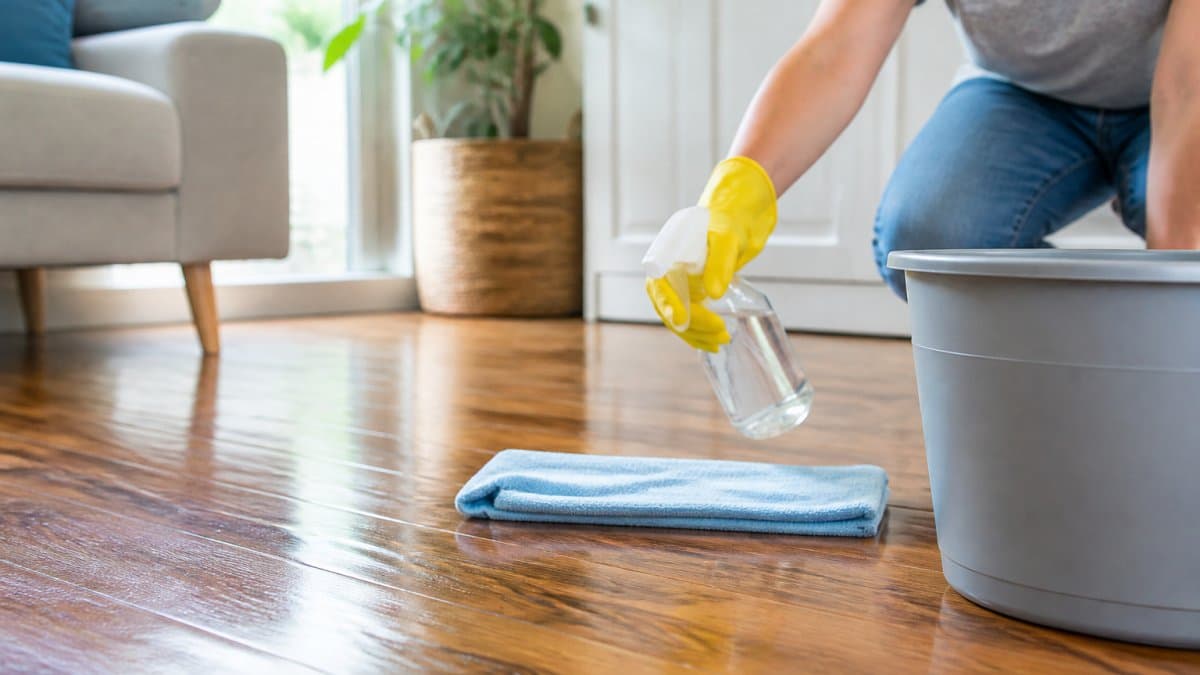
Use the least amount of cleaner that does the job. Over-wetting floors and leaving pools of liquid behind increases residue and can damage wood. Mop or wipe, then go over the floor with clean water or a dry cloth.
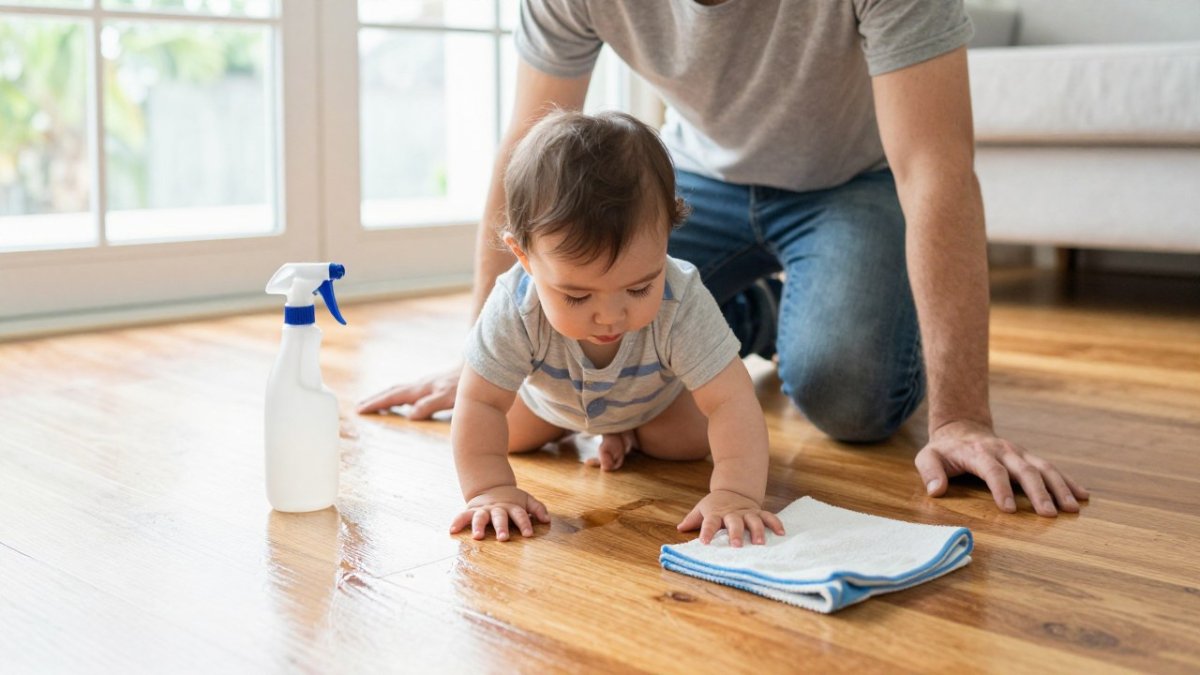
Clean floors more often in areas where babies spend the most time, such as play mats and crawling zones. Wash hands after mopping, and consider keeping a closed spray bottle out of reach. Pet hair and dust can also collect on floors, so regular vacuuming matters as much as the cleaner you choose.
Choosing a Non-Toxic Floor Cleaner for Babies and Booking Your Next Clean
Choosing the safest floor cleaner comes down to reading labels carefully, matching the product to your flooring, using it sparingly, and rinsing well. When you are unsure, a gentle, unscented cleaner recommended for your specific floor is usually the right choice.
If you would rather leave the work to professionals, our team can handle your floors using mild, eco-friendly cleansing agents. Our Commercial Services page covers floor care and cleaning options, and you can get an instant price estimate on our Service Calculator before booking. When you are ready, book your carpet cleaning service online and let our licensed and insured team take care of your floors.
Frequently Asked Questions
What is the best floor cleaner for babies who crawl on the floor?
The safest choice is a simple, unscented cleaner with a short ingredient list, clear dilution instructions, and a label that names its ingredients. Look for products without added fragrance, dyes, or strong solvents, and avoid anything that leaves a residue your child can touch. Because no cleaner is risk-free for every child, check how the product is used on your specific floor type and always keep children out of the room until the surface is completely dry. Professional cleaning services can also recommend products suited to your flooring and household needs.
Can I make a homemade baby safe floor cleaner?
Many families use diluted distilled white vinegar or a mild soap solution for routine cleaning, but homemade mixtures are not automatically safe. Mixing cleaners can create harmful fumes, and some vinegar or acidic solutions can dull sealed hardwood or damage certain tile grout over time. Test any homemade mix on a hidden spot first, rinse with plain water, and let the floor dry fully before a baby crawls on it. Never combine bleach with vinegar or ammonia-based products.
How long should I wait before letting my baby crawl on a freshly cleaned floor?
Wait until the floor is completely dry before letting your baby crawl on it. Drying time depends on the cleaner, the amount of liquid used, humidity, and ventilation, so open a window or run a fan to speed things up. Avoid using too much liquid on any floor, since standing moisture can leave residue and slow drying. If the floor still feels damp or smells strongly of cleaner, wait longer.
How can I tell whether a floor cleaner is safe for my baby?
Start with the product label. Check for a full ingredient list, clear use instructions, and any safety certification you can verify independently. Be cautious with vague terms like chemical-free or natural, since these are not regulated definitions and do not guarantee safety. Review the safety data sheet if one is available, and confirm the cleaner is suitable for your floor material. If your baby has sensitivities or has been exposed accidentally, contact your pediatrician or Poison Control at 1-800-222-1222.