Quick Summary
Yes, hire professional upholstery cleaners when the piece is valuable, the fabric is delicate, or the problem is pet urine, mold, or water damage. Professionals bring extraction equipment, fabric-matched pre-treatment, and experience that homeowners' rented machines lack, mainly because they control over-wetting. For minor refreshing between visits, DIY can still help.
- Excess moisture left in cushions can cause water rings, shrinkage, or mildew.
- Pricing depends on piece count, fabric construction, soil level, and stain treatment.
- Check the cleaning code on the tag: W, S, WS, or X determines the safe method.
- Ask whether the quote is locked or subject to change after inspection, in writing.
- Confirm liability insurance, licensing, and a written guarantee before booking.
Table of Contents
- Why Hire Professional Upholstery Cleaners Instead of DIY
- Upholstery Cleaning Prices: What Affects Your Quote
- Upholstery Cleaning Methods and How to Match Them to Your Fabric
- How to Prepare for Upholstery Cleaning
- How Long Upholstery Cleaning Takes to Dry and What to Expect
- Checklist for Vetting Nearby Upholstery Cleaners
- Questions to Ask Before Booking Your Upholstery Cleaner
- Your Next Step: Request a Free Estimate for Your Upholstery
- Frequently Asked Questions
Why Hire Professional Upholstery Cleaners Instead of DIY
Most homeowners start with a rented machine and a bottle of store-bought shampoo. That works for light surface dirt, but it rarely reaches the foam and backing where odors and allergens settle. A professional upholstery cleaner brings extraction equipment, pre-treatment products matched to the fabric, and experience with what can go wrong. Professional upholstery cleaning uses appropriate pre-treatment products matched to the fabric.
The biggest DIY risk is over-wetting. Excess moisture left in cushions can cause water rings, shrinkage, or mildew, and most consumer machines do not extract enough water to prevent it.
Professional cleaning is worth the cost when the piece is valuable, the fabric is delicate, or the problem is pet urine, mold, or a water loss. For minor refreshing between professional visits, DIY can still help.
Upholstery Cleaning Prices: What Affects Your Quote
Upholstery pricing is not a single rate, it is a stack of line items, and the fastest way to overpay is to accept a phone quote without knowing what is inside it.
What actually moves the number
- Piece count and configuration. A single armchair is the smallest standard job. A sofa is priced higher, and a sectional is usually priced per seat or per section because recliners, chaise ends, and console wedges each add labor. Ask whether the quote is per piece, per seat, or per linear foot, the unit changes the total dramatically. You can get an instant price for your upholstery job to see what your own pieces might run.
- Fabric and construction. Tight-back vs. loose-back cushions, tufting, skirted bases, and removable vs. fixed covers all change how long the job takes. Delicate natural fibers and fabrics with an "S" cleaning code may require solvent methods that cost more per piece than standard hot water extraction.
- Soil level and condition. Light maintenance cleaning is the baseline. Heavy body oil on armrests and headrests, embedded pet hair, and years of accumulated soil add pre-treatment and dwell time. Providers commonly tier pricing as light, moderate, or heavy soil.
- Stain and odor treatment. Pet urine, wine, ink, and grease are usually quoted as add-ons rather than included in the base rate. Enzyme treatment for pet odor and sub-surface extraction for urine that reached the cushion foam are separate line items on most invoices.
- Minimum service fees. Many providers set a minimum job charge so a single ottoman is not worth a truck roll. If your job is small, ask whether the minimum applies and whether bundling a second piece changes the effective rate.
- Access, setup, and travel. Stairs, elevators, tight parking, and furniture that must be disassembled add labor. Some providers charge a trip or travel fee outside a core service radius.
- Protectant and aftercare add-ons. Fabric protectant, deodorizing, and sanitizing treatments are usually optional and priced per piece. Decide in advance whether you want them rather than being upsold at the door.
How to read an itemized estimate
A usable estimate separates labor from products and treatments, states the unit being priced, lists each piece by name, and says whether the price is final or subject to change after inspection.
Watch out: a low phone quote that grows after the technician arrives is one of the most common complaints in this trade, ask upfront whether the quoted price is locked or an estimate subject to on-site revision, and get the answer in writing.
Use the Pricing page on our website to see current service rates and what is included.
Upholstery Cleaning Methods and How to Match Them to Your Fabric
The method should be chosen from the fabric, not from whatever machine the technician brought. Our answers to common questions explain how our eco-friendly process works and which methods we use.
What each code means in practice
- W fabrics tolerate water-based cleaning. Most durable synthetics, cotton blends, and many microfiber weaves fall here. Hot water extraction is usually appropriate.
- S fabrics must not be cleaned with water, moisture can cause shrinkage, water rings, or dye bleed. These need solvent or dry-cleaning methods.
- WS fabrics can take either approach, which gives the technician room to choose based on soil level and drying conditions.
- X fabrics should only be vacuumed. Applying any liquid risks damage, and a provider who proposes wet cleaning on an X code is a red flag.
The three main methods and their trade-offs
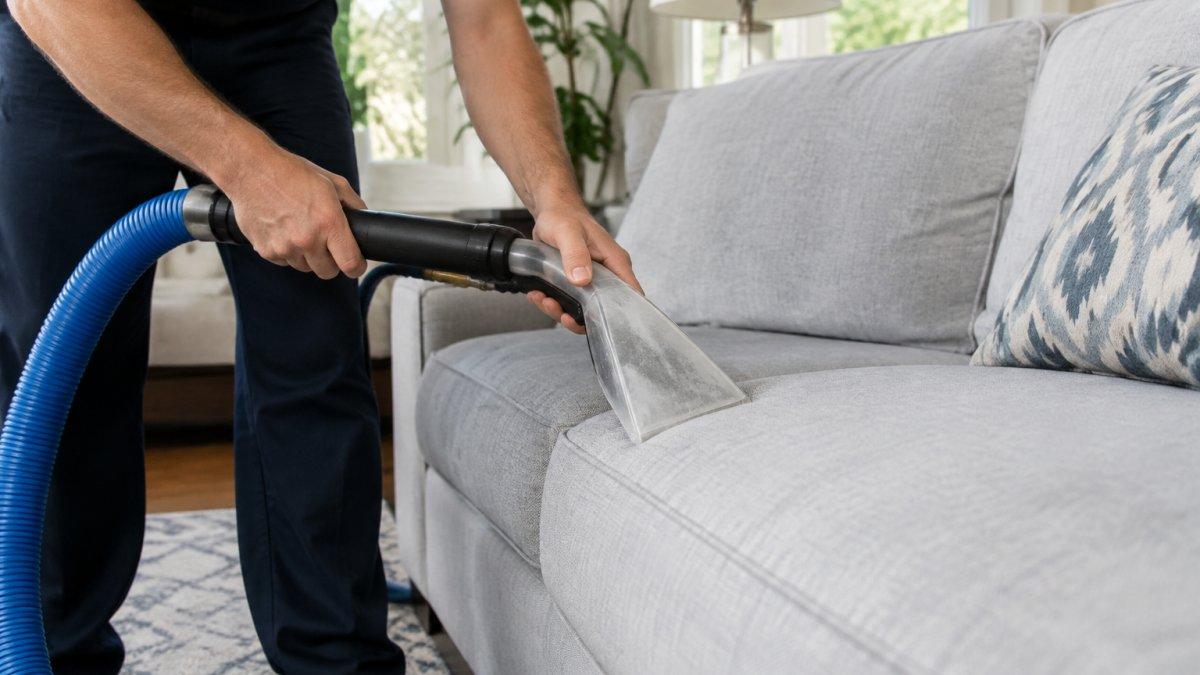
- Hot water extraction (steam-style). Heated solution is injected and immediately extracted under vacuum. It reaches deep soil and is the workhorse for most W and WS fabrics. The trade-off is moisture: thick cushions and humid rooms slow drying, and poor extraction leaves residue that attracts dirt faster. Ask how the provider extracts and how long they expect the piece to stay damp.
- Solvent or dry cleaning. A low-moisture solvent is applied and extracted, avoiding the water damage risk on S codes and delicate natural fibers. It is slower and often priced higher per piece, and ventilation matters because solvents off-gas. Ask what solvent is used and how the room is ventilated.
- Low-moisture foam or encapsulation. A foam or encapsulating agent is worked into the surface and removed with minimal water. It is useful for delicate fabrics, for pieces that cannot dry quickly, and for light soil. The trade-off is less deep cleaning, it is a surface and mid-depth method, not a substitute for extraction on heavily soiled pieces.
Fiber-specific risks to raise before booking
- Rayon and viscose can shrink and water-spot; they often behave like S or WS fabrics and need careful testing.
- Silk and wool are sensitive to heat, alkalinity, and agitation; low-moisture or solvent methods are common.
- Linen can shrink and wrinkle; controlled moisture and fast drying matter.
- Microfiber and polyester blends are generally forgiving but can show pile distortion if over-wetted or scrubbed.
- Leather and faux leather are a separate category, they need pH-appropriate cleaners and conditioning, not fabric extraction.
How a professional should decide
A sound process is: read the tag, identify the fiber, test an inconspicuous area, choose the least aggressive method that will work, and explain the choice to you before starting. Ask the technician to walk you through that reasoning.
Watch out: home stain removers and DIY spot treatments applied before the appointment can set a stain or alter the dye, which limits what any method can recover, tell the technician what you already tried rather than hoping it goes unnoticed.
The table below summarises the cleaning codes and what each one means for the method a technician should use.
| Cleaning code | What it means | Method to use |
|---|---|---|
| W | Water-based cleaner is safe | Hot water extraction is usually appropriate |
| S | Water must not be used | Solvent or dry-cleaning methods only |
| WS | Either water or solvent is safe | Technician chooses based on soil and drying |
| X | Vacuum only, no liquid | Vacuuming only; any liquid risks damage |
How to Prepare for Upholstery Cleaning
Preparation makes the appointment faster and the results better. Start by vacuuming the furniture thoroughly, including cushion crevices, to remove loose dirt that would otherwise turn into mud during cleaning. Our service information explains how the upholstery service works and what to expect on the day. Move throw pillows, blankets, and any valuables off the furniture, and clear the path to the pieces so technicians can work safely.
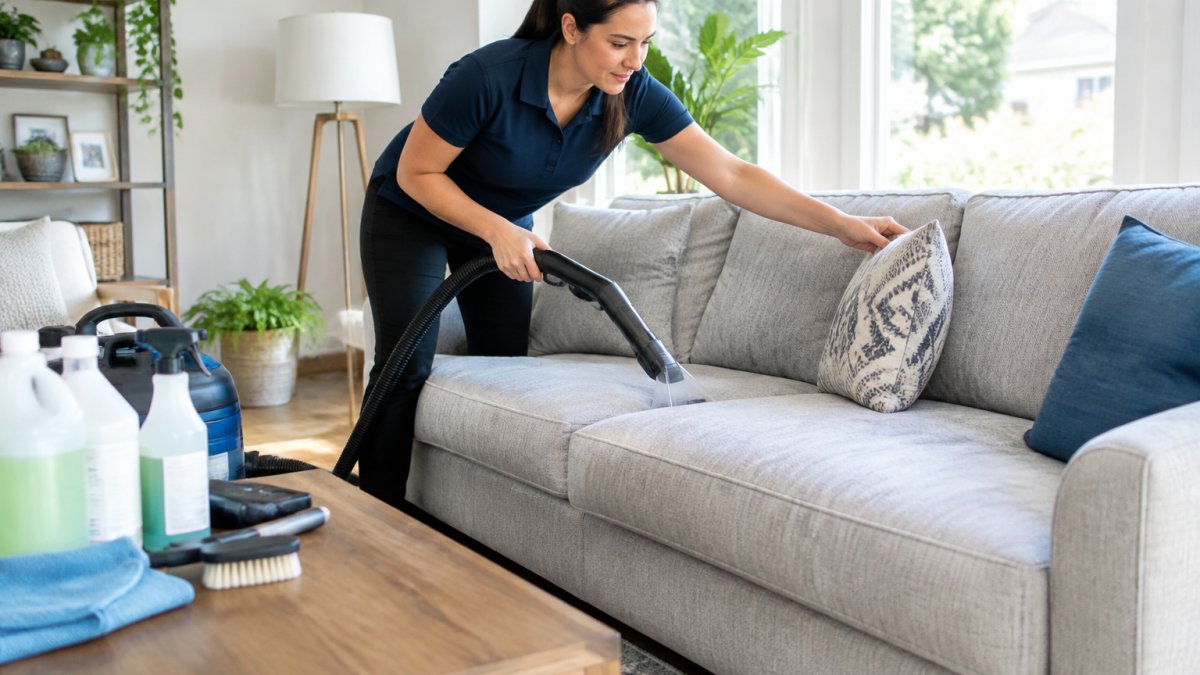
Next, address obvious problems. Note any stains, pet accidents, or spots you have already tried to remove, because the technician needs to know what they are treating. Do not apply home stain removers the night before unless the provider recommends it, since some products can set stains or interfere with the professional solution.
Finally, plan for drying time. Keep pets and children away from freshly cleaned fabric, and leave windows open or run fans if the room is humid.
How Long Upholstery Cleaning Takes to Dry and What to Expect
Drying time depends on the fabric, cushion thickness, and humidity, and can vary between pieces. If a piece still feels damp after a day, tell the provider, because residual moisture can lead to odor or mildew.
Expect a slightly damp feel right after cleaning, and possibly a faint scent of the cleaning agent that fades as the fabric dries. Some fabrics may look a bit lighter or show a subtle texture change, especially if older stains are removed.
Checklist for Vetting Nearby Upholstery Cleaners
Use this checklist before booking a local provider:
- Carries current liability insurance and can provide proof on request
- Is licensed where required and can show proof
- Gives a written, itemized estimate for your specific pieces
- Explains which methods will be used and why
- Tests an inconspicuous area before full cleaning
- Can provide references from local customers
- States a clear guarantee and what it covers
- Uses products they can name and describe
Our business is licensed and insured, and we are BBB Accredited. Ask for documentation before you book, especially if you have had a bad experience with damage in the past.
Questions to Ask Before Booking Your Upholstery Cleaner
Several questions reveal how a provider operates:
- Is this quote final, or can it change after inspection?
- Which cleaning method will you use for my fabric, and how do you test it?
- What happens if a stain does not come out? Is there a guarantee?
- How long will the furniture take to dry, and what should I do during that time?
- Are you licensed and insured? Can you send proof?
- Do you have local references I can contact?
Clear answers to these questions are a good sign. Vague or evasive replies are a warning.
Your Next Step: Request a Free Estimate for Your Upholstery
Upholstery cleaning works best when the method, price, and timing are clear before the first pass with the machine. Start by writing down your pieces, their fabric types, and any stains or odors, then compare written estimates from providers who explain their process. You can request a free estimate from Eco Friendly Steemers to get your upholstery assessed.
Last Updated: November 12, 2026
Frequently Asked Questions
How much does a professional upholstery cleaner cost?
Pricing depends on the number and type of pieces, fabric, soiling level, and how much access the technician has. Pricing depends on the factors above, so the most reliable way to know your cost is to request a free estimate or check current pricing on the Eco Friendly Steemers website. When comparing quotes from any upholstery cleaners, ask whether the price covers all pieces, stain treatment, and deodorizing, and confirm there are no add-on fees for pet odor or heavy soiling.
Is it worth getting a couch professionally cleaned?
Professional cleaning is usually worthwhile when a sofa has deep soiling, pet urine odor, or stains that home products have not removed, or when the fabric care label calls for a professional method. Regular vacuuming and spot treatment can extend time between cleanings. For households with children, allergies, or pets, professional cleaning can address deeper soiling than surface cleaning alone.
How long does professional upholstery cleaning take to dry?
Drying time depends on the fabric, the cleaning method, airflow, and humidity in the room. Many upholstery pieces are dry to the touch within several hours, but thicker cushions and dense fabrics can take longer to dry fully. Ask your technician about expected drying time before the appointment, keep windows open or run fans if the weather allows, and avoid sitting on the cushions until they are completely dry.
What should I ask an upholstery cleaner before hiring?
Ask whether the company is licensed and insured, request proof of coverage before the appointment, and confirm what cleaning method they will use for your fabric. Get an itemized quote that states what is included, ask about the drying time, and find out what happens if a stain does not come out. Requesting references from recent customers in your area is also a useful way to check reliability before you book.