Quick Summary
Air duct cleaning improves indoor air quality only sometimes. It helps most when visible dust, pet dander, construction debris or mold in the ducts is the main source of airborne particles. For a system that is already clean and well filtered, the gain is often small.
- Cleaning helps most with visible dust, pet dander, construction debris or known duct mold.
- A clean system with regular filter changes often sees little benefit from cleaning.
- Cleaning does not fix outdoor pollution, cooking fumes or moisture problems in the building.
- Get a mold assessment before cleaning, since cleaning without containment can spread spores.
- Ask providers for a written scope that includes the air handler, blower and coil.
Table of Contents
- Does Air Duct Cleaning Improve Indoor Air Quality?
- What Does Air Duct Cleaning Entail?
- 7 Signs Your Ducts May Need Cleaning
- Can Air Duct Cleaning Cause Damage?
- How Much Does Air Duct Cleaning Cost?
- How Often Should Air Ducts Be Cleaned?
- Booking Your Air Duct Cleaning: Verify the Work and Measure the Results
- Frequently Asked Questions
Does air duct cleaning improve indoor air quality? Only sometimes, and the answer depends on what is actually in your ducts. For a home with dust, pet hair or visible debris in the registers, cleaning can reduce what gets blown into living spaces. For a system that is clean and well filtered, the gain is often small. This guide explains the signs that point to cleaning, what the work involves, what it can and cannot do, and how to check that the job was done properly.
Does Air Duct Cleaning Improve Indoor Air Quality?
Air duct cleaning removes loose dust, debris and some built-up contaminants from the supply and return ducts. It helps most when those materials are the main source of airborne particles in the home.
The evidence on health outcomes is mixed. The EPA guidance on indoor air quality and HVAC systems points to source control, ventilation and filtration as the main levers for indoor air. Duct cleaning is one tool among those, not a cure for every air problem.
- Helps most: visible dust in registers, pet dander, construction debris, or a home with a known mold problem in the ducts
- Helps less: a clean system with a regular filter change schedule
- Does not fix: outdoor pollution, cooking fumes, or moisture problems in the building envelope
What Does Air Duct Cleaning Entail?
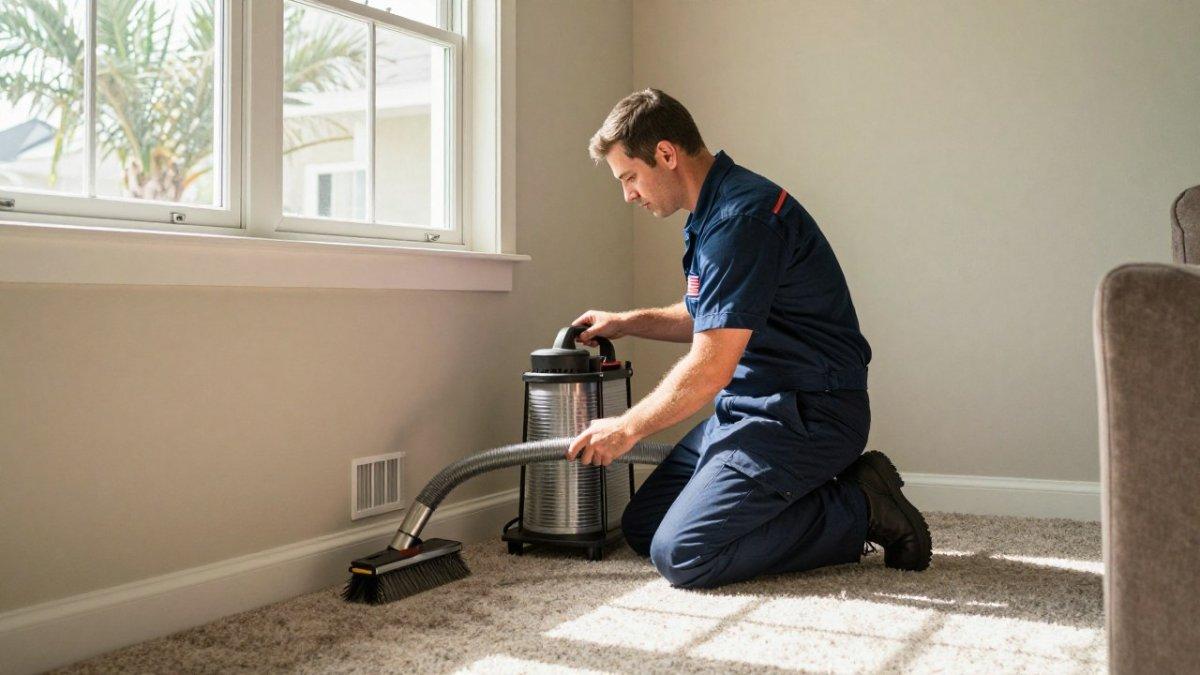
A proper cleaning covers the whole air path, not just the vents you can see. Technicians use a truck-mounted or portable negative-air vacuum, agitation tools and sealed access points to pull loose material out of the system.
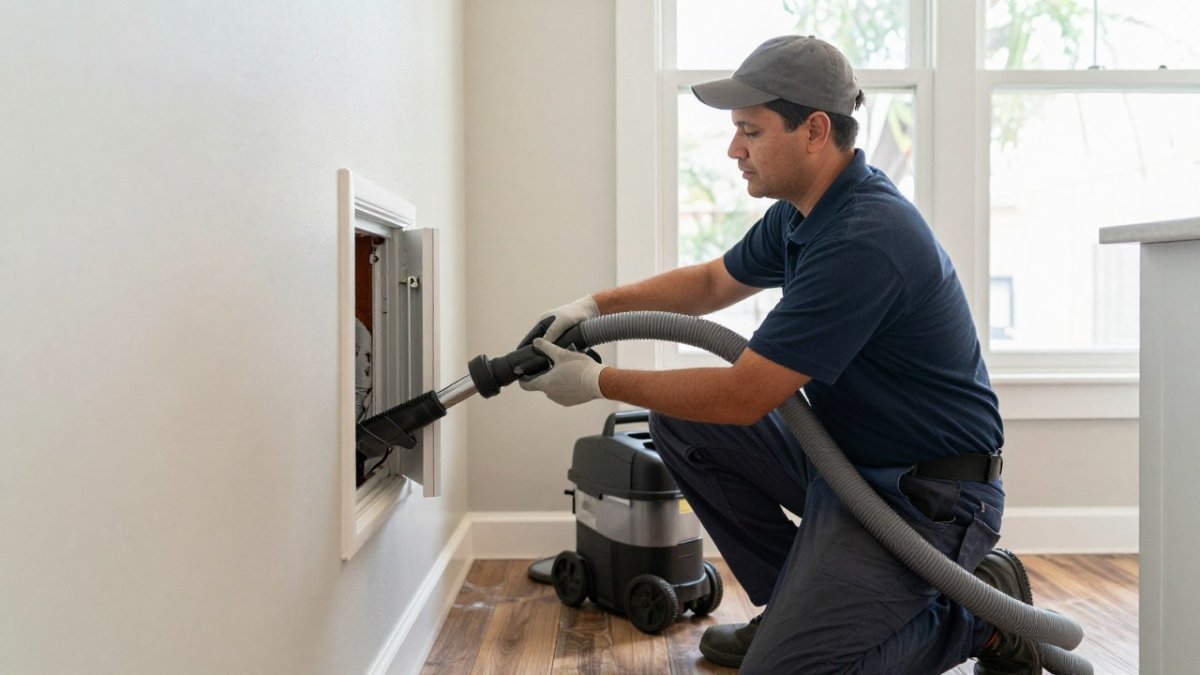
- Inspection: camera or visual check of supply and return runs, the air handler and the coil
- Access and sealing: cut access points where needed and seal them after cleaning
- Agitation: brushes or air whips to loosen debris from the duct walls
- Extraction: negative-pressure vacuum to remove loosened material
- Register and grille cleaning: removal and washing of supply and return covers
- Filter replacement: a new filter is installed at the end of the job
Ask whether the air handler and blower are included. Those parts often hold the most dust.
7 Signs Your Ducts May Need Cleaning
Look for these signs before you book a cleaning:
Monday – Upgrade Spotlight: “Upgrade Spotlight: Why Air Duct Cleaning Improves Indoor Air Quality”
Fix & Improve with Marcus
- Visible dust around supply registers, especially a dusty film that returns soon after wiping
- Debris falling out of vents when the system turns on
- Musty or stale odors that come from the system rather than the room
- Visible mold on duct surfaces, insulation or the air handler
- Pest activity, such as droppings, nests or insects coming from vents
- Recent renovation or construction that left drywall dust or debris in the system
- Pets or allergies in the home, with more dust and dander than cleaning can keep up with
A single sign is not proof of a problem. Two or more, especially mold or pests, is a stronger reason to schedule an inspection.
Decision Tree: Matching Contamination Signs to Next Steps
Use this simple guide to decide what to do next:
- Dust only, no mold or pests: Replace the filter, check the filter size and rating, then recheck in a few months. Book cleaning if dust keeps building up.
- Debris falling from vents or after construction: Book a professional cleaning and ask for a post-cleaning inspection.
- Musty smell or visible mold: Stop and get a professional inspection before running the system. Mold may need remediation, not just cleaning.
- Pests or droppings: Call a pest control provider first, then clean the ducts after the source is removed.
- Allergy or asthma concerns with no visible signs: Improve filtration and source control first. Cleaning may help, but it is not a guaranteed fix.
Use this quick guide to match what you see in your home with the next step to take.
| Sign | What it suggests | Next step |
|---|---|---|
| Visible dust around supply registers | Dust is returning into living spaces | Replace filter, then recheck; book cleaning if dust keeps building |
| Debris falling out of vents | Loose material inside the system | Book a professional cleaning and post-cleaning inspection |
| Musty or stale odors from the system | Possible moisture or microbial growth | Get a professional inspection before running the system |
| Visible mold on ducts, insulation or air handler | Mold may need remediation, not just cleaning | Get a mold assessment first |
| Pest activity or droppings from vents | An infestation may be the source | Call pest control first, then clean the ducts |
| Recent renovation or construction | Drywall dust or debris in the system | Book cleaning and ask for a post-cleaning inspection |
| Pets or allergies with heavy dust | Dust and dander exceed what cleaning can keep up with | Improve filtration and source control; cleaning may help |
Can Air Duct Cleaning Cause Damage?
Poorly done cleaning can cause damage.
Some providers use harsh chemicals or biocides inside the ducts. Ask what products are used, whether they are approved for use in HVAC systems, and whether any residue is left behind.
Watch out: if the system has visible mold, cleaning without containment can push spores into the living space. Get a mold assessment first.
How Much Does Air Duct Cleaning Cost?
Pricing depends on the size of the home, the number of registers and returns, system access, and whether the air handler is included. Most residential jobs fall in a broad range, and the spread is driven more by scope than by brand.
Compare quotes that list the same scope line by line. A low quote that skips the return ducts or the air handler is not a fair comparison. Ask each provider to state, in writing:
- Number of supply and return registers included
- Whether the air handler, blower and coil are included
- Whether access cuts and resealing are included
- Whether before-and-after photos are provided
- Whether any chemical or biocide treatment is included, and what product
For current prices, see the Eco Friendly Steemers pricing page or request a free estimate. Pricing depends on the size of the system and the scope of work.
Weighing Cleaning Against Alternatives
Cleaning is one line item in a broader air-quality budget. Before you approve a quote, compare it against these alternatives, which often deliver more per dollar:
- Filter upgrade: A higher-MERV filter (within what your blower can handle) captures more particles at every cycle and costs far less than a cleaning. Check the manufacturer's maximum rated MERV before upgrading.
- HVAC maintenance: A clean blower, coil and drain pan prevent the moisture and dust conditions that make cleaning necessary in the first place.
- Moisture control: Fixing leaks, improving drainage and controlling humidity addresses mold at its source; cleaning alone will not stop it from returning.
- Source removal: Removing carpet, sealing gaps, and controlling pets and cooking exhaust reduces what enters the system.
A practical rule most practitioners use: if the quote is large and the only justification is "better air quality" with no visible contamination, spend part of that budget on filtration and maintenance first, then revisit cleaning if dust still accumulates.
Watch out: quotes that bundle "sanitizing" or "deodorizing" treatments without explaining the product or its HVAC approval status can inflate the bill without a documented air-quality benefit.
How Often Should Air Ducts Be Cleaned?
There is no single schedule that fits every home. As a general guide, many homes do well with inspection every few years and cleaning when dust or debris builds up. Homes with pets, smokers, allergies, recent renovation or high dust levels may need cleaning sooner.
Change the filter on the schedule the manufacturer recommends, usually every one to three months. A good filter and regular maintenance often do more for air quality than cleaning alone.
Booking Your Air Duct Cleaning: Verify the Work and Measure the Results
Before you book, ask the provider for proof of licensing and insurance and for a written scope of work. The scope should name every component to be cleaned, the access points to be cut and resealed, and the documentation you will receive. A provider that cannot put this in writing is a provider to skip.
What a Thorough Cleaning Should Include
A complete job covers the whole air path, not just the registers. Confirm that the scope includes:
- Inspection of supply and return runs, the air handler, the blower and the coil
- Containment and negative-pressure vacuum so debris does not migrate into living spaces
- Agitation of duct walls with brushes or air whips, followed by extraction
- Cleaning of the air handler, blower and coil, not just the ducts
- Removal and washing of supply and return grilles
- Resealing of every access cut
- A new filter at the end of the job
How to Verify the Work
Ask for before-and-after photos of each duct run, the air handler and the coil. Walk the home after the job and check that access panels are sealed, registers are reinstalled, and no debris was left in closets or on floors. If the provider used a camera inspection, ask to see the footage.
Watch out: if a provider refuses to document the air handler and coil or cannot show before-and-after photos, treat the job as unverified regardless of the price.
How to Measure the Results
Duct cleaning alone may not change what a particle counter reads, because much of the particulate in a home comes from cooking, candles, pets and outdoor air. Set realistic expectations:
- Dust accumulation: Note how often you dust and how quickly a film returns to a dark surface. This is the most reliable simple check.
- Odor: Musty or stale smells that came from the system should fade within days if the source was in the ducts.
- Visible debris: Debris falling from registers should stop.
- Symptoms: Allergy or asthma symptoms may improve if the ducts were a meaningful source, but the evidence for broad health benefits is uncertain, and cleaning is not a substitute for medical care.
These are simple checks, not lab tests, but they show whether the work made a visible difference. If nothing changes, the source was likely elsewhere, filtration, moisture or outdoor air, and that is where the next dollar should go.
Ready to get a clear quote? Request a free estimate from Eco Friendly Steemers.
Frequently Asked Questions
Will my house be dusty after duct cleaning?
Some dust can be released during the cleaning, which is why a reputable provider seals registers, uses negative-pressure vacuums, and protects the work area. Ask the company how it contains debris before work starts. Expect a light cleanup of vents and nearby surfaces afterward, and change or check your filter within a few weeks to catch anything that remains in the system. If dust stays heavy for more than a day or two, contact the provider so the work can be inspected.
Can air duct cleaning cause damage?
Poor technique can cause problems, including loosened duct insulation, damaged flex duct, or leaks at connections. Damage is less common when the crew inspects the system first, uses equipment suited to your duct material, and takes photos before and after. Ask whether the company checks for leaks and whether it documents the condition of the ducts. Keeping the cleaning scope focused on what the inspection shows helps limit risk.
How much does air duct cleaning cost for a 2,000-square-foot house?
Pricing depends on the number of supply and return registers, the layout of your system, access, and whether mold or pests are present. Eco Friendly Steemers provides custom quotes, so the best way to see a figure for your home is to request a free estimate through the brand's website or pricing page. Compare quotes that list the same scope, including whether the price covers the air handler, the registers, and a post-cleaning inspection.
Does air duct cleaning help allergies and asthma?
Evidence is mixed. Cleaning may reduce dust that settles in ducts, but it does not remove the sources of allergens, such as pet dander, moisture, or outdoor pollen entering through leaks. Households with allergies or asthma often get more benefit from source control, regular filter changes, and fixing humidity or leak problems. Discuss the health goals with a physician before assuming cleaning alone will change symptoms.