Last Updated: November 14, 2026
Quick Summary
To remove dog urine from carpet, blot up all moisture first, then apply an enzymatic cleaner and let it dwell for ten to fifteen minutes before rinsing and extracting. For dried stains, re-wet the full contaminated area and repeat treatment two or three times over a few days.
- Dog urine contains uric acid crystals that bind to carpet fibers and release odor again when humidity rises.
- Press white towels into the wet spot instead of rubbing, which pushes urine deeper into the backing.
- Give enzymatic cleaners ten to fifteen minutes of dwell time so they can break down uric acid crystals.
- Use a blacklight in a darkened room to find urine that spread beyond the visible stain.
- Never mix vinegar and hydrogen peroxide, which forms corrosive peracetic acid that is harsh on carpet dyes.
Table of Contents
- Why Dog Urine Stains and Smells Linger in Carpet
- What You'll Need Before You Start Cleaning
- Step-by-Step: How to Remove Fresh Dog Urine from Carpet
- How to Get Dried Dog Pee Out of Carpet
- How to Clean Dog Urine from Carpet with Vinegar and Baking Soda
- How to Remove Dog Urine from Carpet with Hydrogen Peroxide
- What Kills the Smell of Dog Urine in Carpet
- What Not to Do When Cleaning Pet Stains
- Frequently Asked Questions
Why Dog Urine Stains and Smells Linger in Carpet
Dog urine is a mix of water, urea, and uric acid, and that uric acid is the reason the smell comes back.
Liquid soaks through the carpet face into the backing and padding. The surface dries in hours; the padding underneath can stay damp for days.
Every time humidity rises, those crystals release odor again, which is why a spot can smell fine in the morning and awful by evening, and why surface cleaning alone rarely fixes anything.
The stain on top is easy; the reservoir underneath is the real problem.
What You'll Need Before You Start Cleaning
Gather your supplies first so you are not hunting for towels mid-cleanup. Here is the basic kit:
- Absorbent towels or paper towels (white, so dye does not transfer)
- White vinegar and baking soda
- Dishwashing detergent (plain, no bleach, no moisturizing additives)
Match the Product to the Carpet, Not Just the Stain
Carpet is not one material. Each responds differently to cleaners:
- Nylon is durable and generally tolerant of mild acids like diluted white vinegar, but it can be permanently stained by some acid dyes and by strong alkaline cleaners over time.
- Polyester and PET are oil-loving fibers. They resist water-based stains but can absorb oily residue, and some detergents leave a sticky film that attracts dirt.
- Polypropylene (olefin) is solution-dyed, so color loss is less likely, but it is sensitive to heat and can crush or mat if scrubbed hard.
If you do not know your fiber, check the manufacturer's label or the original installation paperwork. When in doubt, treat the carpet as if it were wool: use the mildest product, the least moisture, and the shortest dwell time.
Read the Label Before You Combine Anything
Product labels list active ingredients, intended surfaces, and often explicit warnings against mixing. Follow them, and never combine two products in the same bottle unless the labels say it is safe.
A common and dangerous mistake is mixing vinegar and hydrogen peroxide, which forms peracetic acid, corrosive, irritating to skin and lungs, and harsh on carpet dyes. Adding ammonia or bleach to an enzymatic cleaner is another: ammonia interferes with the enzymes, and bleach can strip color.
Test Every Solution on an Inconspicuous Area
Carpets are dyed, and some are not colorfast. Hydrogen peroxide is a mild bleach and can lighten carpet fibers. Vinegar can affect some acid-dyed colors.
Test each solution in a hidden spot, such as a corner under furniture or inside a closet.
Watch out: a product that passes on one area can behave differently on a stain already treated with another cleaner, so test on the actual stain only after confirming the product is safe on the carpet overall.
Have a Rinse and Extraction Plan Before You Start
Every cleaner you apply needs to come back out; leftover detergent attracts dirt and can leave a sticky residue that looks dirty again within days. Decide how you will rinse and extract before you start: a wet vacuum or carpet cleaning machine is ideal, but clean white towels and a spray bottle of plain water work for small spots. Rinse until the water you blot up runs clear, then extract or blot until the carpet is only damp.
Step-by-Step: How to Remove Fresh Dog Urine from Carpet
Speed matters with a fresh stain. The goal is to pull liquid out before it reaches the padding. Follow these steps in order.
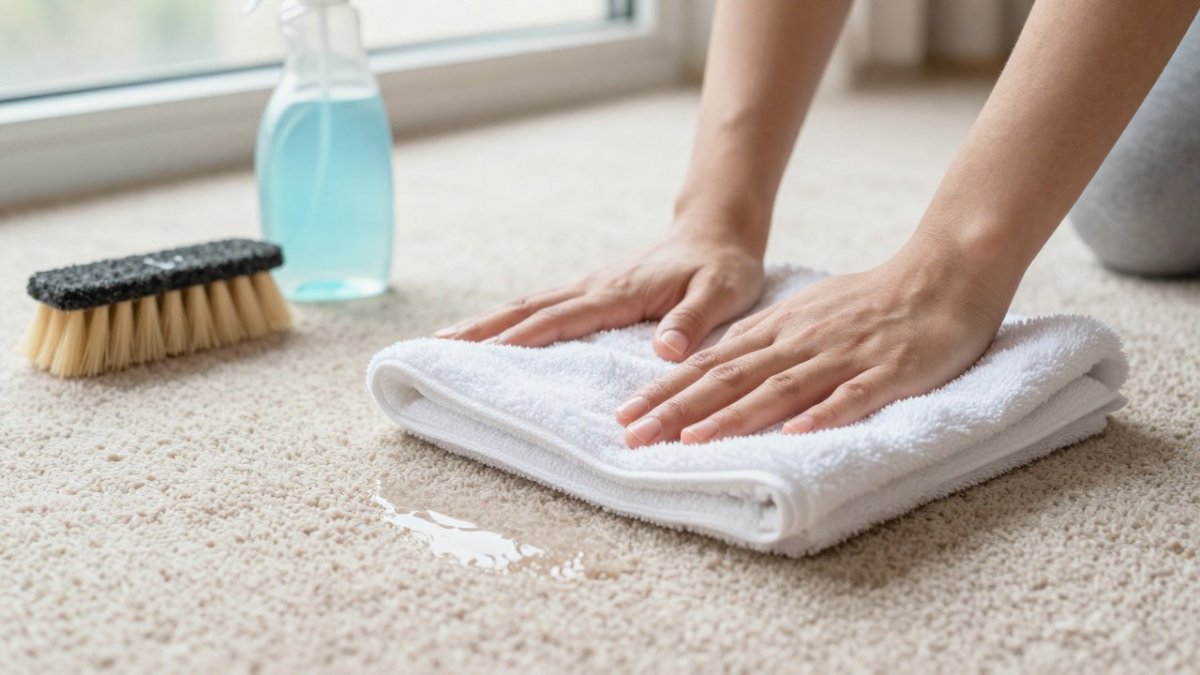
Blotting Up the Wet Spot First
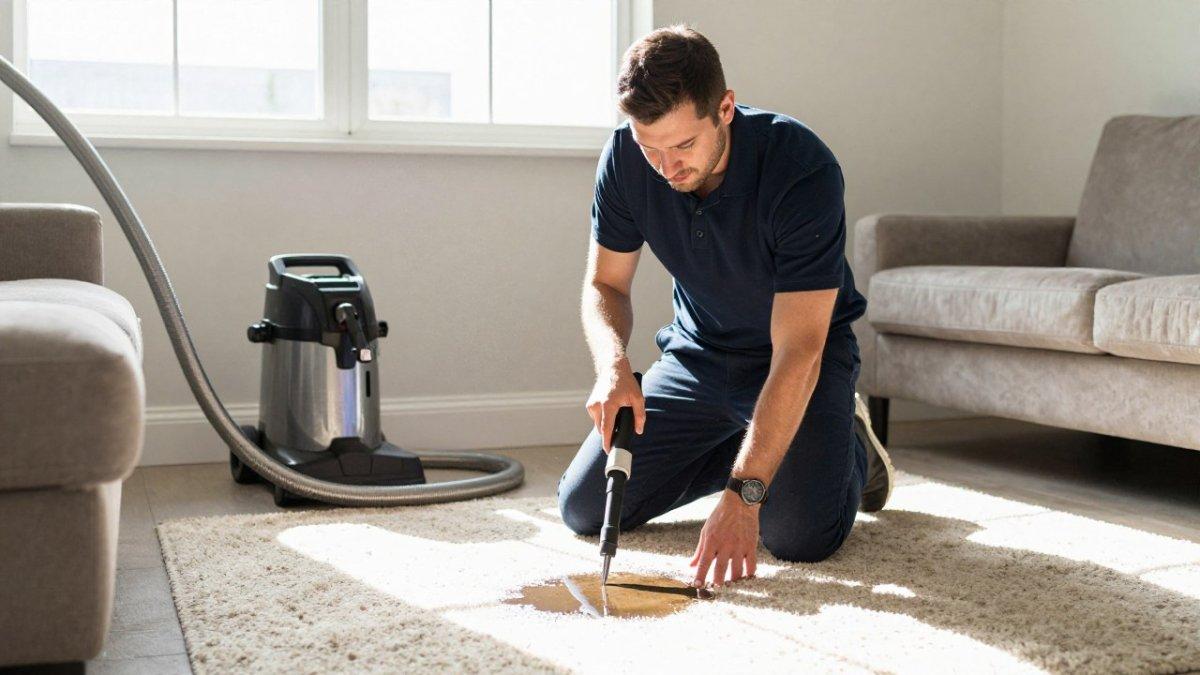
Press, do not rub. Rubbing pushes urine deeper into the backing and spreads the stain wider.
- Lay several absorbent towels over the wet spot.
- Stand on them or press down hard with your hands.
- Swap in dry towels and repeat until no moisture transfers.
- Rinse the area with lukewarm water, then blot again.
Applying Cleaner and Allowing Dwell Time
Apply your cleaning solution and let it sit. Dwell time is what does the work, most people spray and immediately scrub, which wastes the product.
Give an enzymatic cleaner the time it needs to break down uric acid crystals. Ten to fifteen minutes is a reasonable starting point, and the label instructions always win.
Rinsing and Extracting the Cleaning Solution
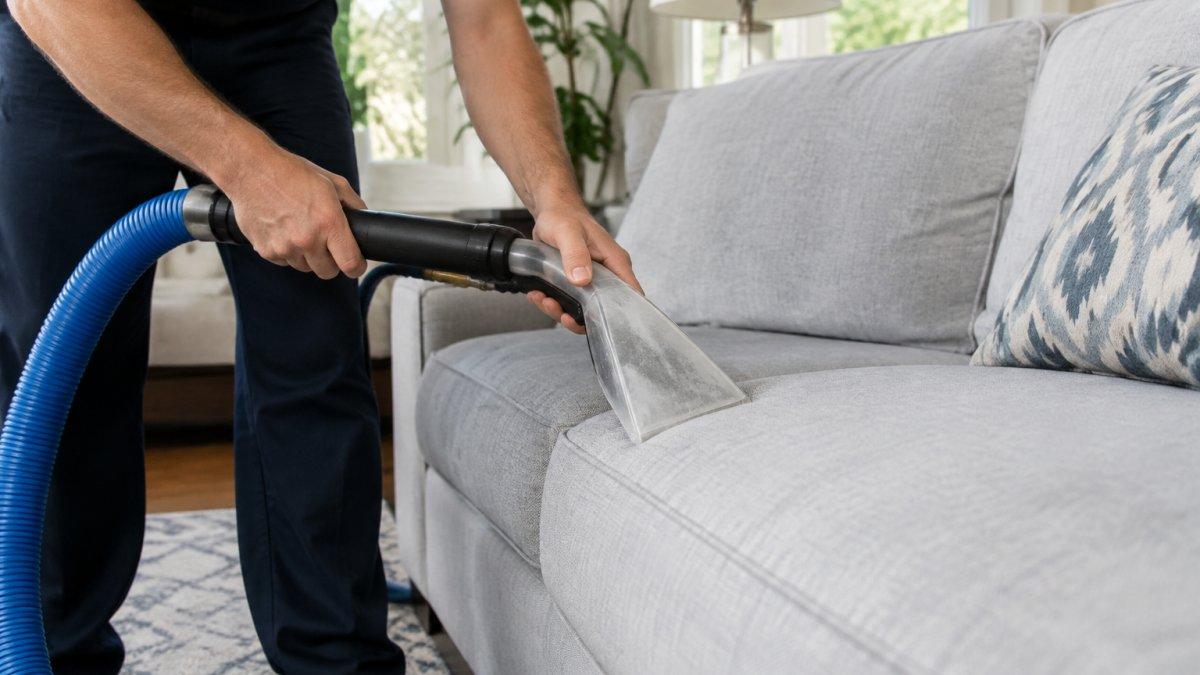
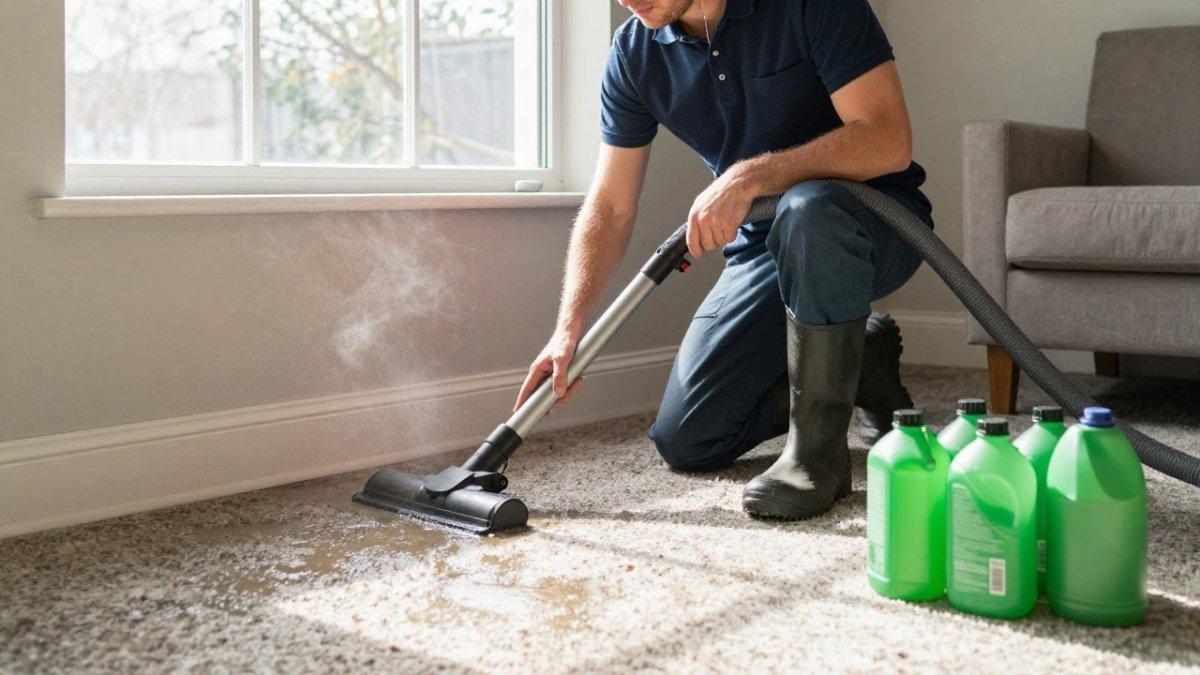
Leftover cleaner attracts dirt and leaves a sticky residue. Rinse with clean water and extract with a wet vacuum or cleaning machine; if you have neither, blot with clean towels until the carpet is only damp. Then air-dry with good airflow.
Here is the fresh-stain sequence in order, with the timing the article gives for each stage.
| Step | What to do | Time or frequency |
|---|---|---|
| Blot the wet spot | Press white towels down, do not rub | Repeat until no moisture transfers |
| Rinse and blot | Rinse with lukewarm water, then blot again | After blotting |
| Apply cleaner | Apply solution and let it dwell | Ten to fifteen minutes |
| Rinse and extract | Rinse with clean water, extract or blot | Until carpet is only damp |
| Dry | Air-dry with good airflow | Until fully dry |
How to Get Dried Dog Pee Out of Carpet
Set-in stains need a slower approach. The liquid is gone, but the uric acid crystals remain bonded to the fibers, and the source may be deeper than the surface suggests. Before you clean, find out how far the urine actually went.
First, Locate the Urine That Has Soaked Through
A stain that looks small on top can hide a much larger reservoir underneath. Urine wicks outward and downward through the face, backing, and padding, so the surface can feel dry while the padding stays damp for days.
Use these checks to map the real extent of the contamination:
- The towel-press test. Fold a dry white towel over the stain and stand on it for 30 seconds. Moisture or odor transfer means the contamination is deeper than the surface.
- The backing check. Lift a corner of the carpet near the stain, or press firmly along its edges. A soft, spongy, or damp feel signals saturation.
- The odor trace. On a cool, humid morning or after a shower, note where the smell is strongest, often at the edges where the liquid spread, not the center.
- The UV check. In a darkened room, sweep a blacklight slowly across the carpet. Urine deposits typically fluoresce yellow-green or bluish. Mark the edges with painter's tape so you clean the full area.
If the UV check or the towel-press test shows contamination beyond the visible stain, treat the larger area, not just the spot. Surface cleaning a small center while the edges remain saturated is a common reason odor persists.
Re-Wet and Treat the Full Contaminated Area
Once you know the true footprint, re-wet the area lightly with lukewarm water so the cleaner can reach the crystals. Work in small sections and extract thoroughly each time.
Apply an enzymatic cleaner and extend the dwell time beyond a fresh-stain treatment.
Repeat treatment two or three times over a few days rather than soaking once. Between treatments, let the carpet dry completely with good airflow. A fan or open windows help; avoid heat, which can set the stain.
Know When the Padding Is the Problem
If the stain and odor return after two or three honest treatment cycles, the contamination has likely reached the padding. Household tools cannot extract liquid from padding through the carpet face reliably. At that point you have three practical options:
- Professional extraction that reaches the backing and padding with equipment designed for deep extraction.
- Padding replacement in the affected area, which may require lifting the carpet. This is common for large or repeatedly soiled areas.
- Carpet replacement if the contamination is widespread or the backing has degraded.
Watch out: do not seal or cover a damp area with furniture, rugs, or plastic before it is fully dry. Trapped moisture under the carpet can lead to mold and delamination of the backing, which is a much larger repair than the original stain.
How to Clean Dog Urine from Carpet with Vinegar and Baking Soda
The vinegar and baking soda method is the most popular DIY route and works well on fresh, mild stains. White vinegar neutralizes some of the alkaline compounds in urine, and baking soda absorbs moisture and odor.
Here is the process for how to clean dog urine from carpet with vinegar and baking soda:
- Blot up as much liquid as possible.
- Mix equal parts white vinegar and lukewarm water in a spray bottle.
- Saturate the stain lightly and let it sit for ten minutes.
- Blot dry.
- Sprinkle baking soda over the area while it is still slightly damp.
- Let it sit for several hours or overnight.
- Vacuum thoroughly.
For deeper natural methods, including fresh and dried stain variations, see our guide on how to remove pet urine from carpet naturally.
How to Remove Dog Urine from Carpet with Hydrogen Peroxide
Hydrogen peroxide is stronger than vinegar and works better on old, stubborn stains. Mix one part 3% hydrogen peroxide with two parts lukewarm water and add a small drop of dishwashing detergent.
Spray the stain, let it dwell for ten minutes, then blot and rinse. Repeat if the stain fades but does not disappear.
Test first. Hydrogen peroxide is a mild bleach and can strip color from carpet fibers. Never combine it with vinegar in the same bottle.
What Kills the Smell of Dog Urine in Carpet
Enzymatic cleaners are the most reliable answer to what kills the smell of dog urine in carpet. Enzymes digest the uric acid crystals that cause odor, rather than masking them with fragrance.
Air fresheners and scented sprays only cover the smell until the next humid day. Baking soda helps as an absorbent but does not break down uric acid.
If odor keeps returning after several treatments, the contamination has likely reached the backing or padding, where surface cleaning cannot fix it. If you still have questions after DIY attempts, our FAQ page covers how professional cleaning handles odor at the source.
What Not to Do When Cleaning Pet Stains
The most common mistakes make stains permanent or damage the carpet. Avoid all of these:
- Do not rub. Rubbing frays carpet fibers and drives urine deeper.
- Do not use bleach or ammonia-based cleaners. Ammonia smells like urine and invites repeat accidents.
- Do not mix vinegar and hydrogen peroxide. The combination is unsafe on carpet.
If DIY methods fail after a few honest attempts, professional extraction reaches the backing and padding where household tools cannot. You can request a free estimate or check carpet cleaning pricing before deciding.
Dog urine that has soaked into padding will keep announcing itself until the source is extracted. If you have tried the methods above and the smell persists, Eco Friendly Steemers can help.
Frequently Asked Questions
How do I get old dog pee out of carpet?
Old, set-in stains need more dwell time than fresh ones. Rehydrate the spot with lukewarm water, then apply an enzymatic cleaner and let it sit for 10 to 15 minutes so the enzymes can break down the uric acid crystals. Blot, rinse with clean water, and repeat if the stain or odor remains. If the urine reached the carpet backing or padding, surface cleaning will not fix it and the padding may need replacement.
What kills the smell of dog urine in carpet?
Enzymatic cleaners work best because they break down the uric acid crystals that cause the odor, rather than masking them. Vinegar and baking soda can neutralize surface odor on mild stains, but they do not reach deep into carpet fibers or padding. For persistent smells, you may need to locate hidden urine with a blacklight and treat each spot, or call a professional with extraction equipment.
Can hydrogen peroxide remove dog urine stains from carpet?
Hydrogen peroxide can lift the yellow stain and lighten discoloration, but it is a mild bleach and can damage or fade some carpet dyes. Always test it on an inconspicuous area first and use a 3% solution mixed with water. It also does not eliminate odor the way an enzymatic cleaner does, so use it for visible staining and follow with an enzyme treatment for smell.
Does dog urine smell ever go away on carpet?
It can, but only if the source is fully treated. Odor lingers when urine soaks into the carpet backing or padding and is never reached by surface cleaning. If you have treated the spot repeatedly and the smell returns, especially on humid days, the padding is likely saturated. In that case, replacing the affected padding or booking professional extraction is the reliable fix.